Online Dermatologist > Heat Rash (Miliaria)

Heat Rash (Prickly Heat): What It Looks Like and How to Find Relief

by | Jun 12, 2025 | Blog, Rash

When the warm summer season arrives, it’s natural to want to embrace the outdoors. whether it’s a sunny road trip, a relaxing beach day, or an invigorating hike. However, along with the joy of summer comes the challenge of protecting our skin from the heat. One common and often uncomfortable result of hot, humid weather is heat rash.

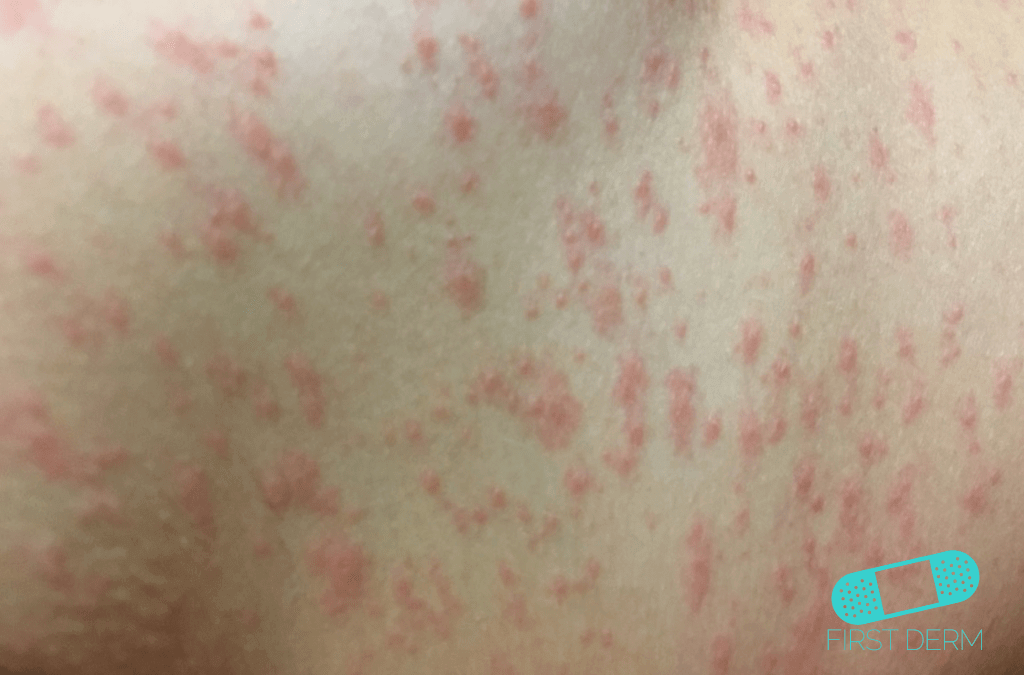
Heat rash (Miliaria) on the scalp, showing small, raised bumps due to blocked sweat ducts. The skin condition is commonly caused by heat and excessive sweating

Heat rash (Miliaria) on the scalp, showing small, raised bumps due to blocked sweat ducts. The skin condition is commonly caused by heat and excessive sweating


What Is Heat Rash (Miliaria)?

Heat rash, also known as prickly heat or miliaria, is a common skin condition that arises when eccrine sweat glands and their ducts become blocked[1]. This blockage leads to sweat accumulating beneath the skin’s surface, resulting in a rash characterized by small, itchy bumps. The leakage of eccrine sweat into the epidermis or dermis is the underlying mechanism, creating the characteristic rash often referred to as “sweat rash.” This can be triggered by factors such as cutaneous debris or bacteria, including S. epidermidis, which may form biofilms.This condition is particularly prevalent in hot, humid environments, especially during the summer months. Heat rash is commonly observed in infants and children due to their immature sweat ducts, as well as in active adults, especially those living in hot and humid climates

While generally self-limiting, understanding heat rash symptoms and effective treatment for heat rash can provide significant relief.


Types of Heat Rash

Heat rash in newborns babies and toddlers

Heat rash, or miliaria, is categorized into different types based on how deeply the sweat ducts are blocked. While heat rash can affect individuals of all genders and ethnicities, the prevalence of each type may vary among specific populations.

Here are the main types of heat rash:

  1. Miliaria Crystallina
  • Appearance: This type presents as tiny, clear, non-itchy blisters, typically 1 to 2 millimeters in size. They resemble small water droplets on the skin.
  • Cause: The sweat duct obstruction is very superficial, occurring in the outermost layer of the skin (stratum corneum).
  • Who gets it: Also known as sudamina, it commonly affects newborns, with the highest incidence observed in those 2 weeks of age or younger. This rash affects approximately 5% to 9% of newborns.[1] It can also occur in adults who have recently moved to a warmer climate.
  • Severity: Miliaria crystallina is generally asymptomatic and self-limited, meaning it resolves on its own without needing specific treatment.


  1. Miliaria Rubra (Prickly Heat)
  • Appearance: This is the most common type, characterized by red, itchy bumps. If pus-filled bumps develop, it’s called miliaria pustulosa, which might indicate a bacterial infection.
  • Cause: The sweat duct obstruction occurs deeper within the epidermis, triggering an inflammatory response.
  • Who gets it: It is frequently observed in newborns between 1 and 3 weeks of age. This condition can also affect up to 30% of adults living in hot and humid conditions.[1]
  • Severity: Miliaria rubra can cause significant discomfort, with affected individuals often experiencing intense itching and stinging. Treatment is usually recommended to manage symptoms.


  1. Miliaria Profunda
  • Appearance: This type results in flesh-colored, firm bumps that are generally subtle and can be asymptomatic.
  • Cause: The sweat duct obstruction occurs even deeper, at the junction between the dermis and epidermis, causing sweat to leak into the papillary dermis.
  • Who gets it: This is the rarest form of miliaria, most commonly seen in individuals who have had recurrent episodes of miliaria rubra or those exposed to new warm climates, such as military personnel deployed in tropical regions.
  • Severity: While the bumps themselves might not be itchy, widespread miliaria profunda can impair the body’s ability to sweat, potentially leading to complications like heat exhaustion. Treatment may be warranted in such cases.

In both miliaria rubra and miliaria profunda, the affected skin areas might not sweat due to the blocked sweat glands. If a large area of the body is affected, this can lead to heat exhaustion because the body cannot cool itself effectively. This is an important consideration if a skin rash is accompanied by a high body temperature.


What Does Heat Rash Look Like?

Heat rash, also known as miliaria, presents with distinct appearances depending on its type. Though often characterized by small, red, itchy bumps due to blocked sweat ducts, its specific look varies.


  • Miliaria crystallina

This type presents as tiny, clear blisters, approximately 1 to 2 millimeters in size. These blisters resemble water droplets on the skin and rupture easily. Since these blisters are very shallow, there is usually no inflammation. This rash is often observed on the upper chest, neck, and head. It generally appears within a few days of exposure to heat and resolves within a day once the superficial layer of skin sheds.


  • Miliaria rubra (Prickly heat)

This results in larger, red bumps and blisters. Unlike some other rashes, miliaria rubra does not primarily involve hair follicles. If pus-filled bumps are present, it is termed miliaria pustulosa, which may indicate a bacterial infection. Due to the inflammation, affected individuals may experience itching and pain, which can worsen with perspiration. In babies, usually between one and three weeks old, it commonly appears in the groin, armpits, and neck. In adults, miliaria rubra is often found in areas where clothing rubs, such as the body and limbs, while the face is typically unaffected.


  • Miliaria profunda

This type of heat rash causes large, firm, flesh-colored bumps that are not centered around hair follicles. The rash can range from extremely itchy to asymptomatic. It is often seen in individuals who have had multiple episodes of miliaria rubra. In adults, this rash usually affects the body but can also involve the arms and legs. It typically appears within minutes to hours of sweating and disappears within an hour after sweating ceases.


Symptoms on Different Skin Tones

While the appearance of heat rash can vary, here’s how symptoms may present on different skin tones

  • On lighter skin, heat rash typically appears as red bumps.
  • On brown or black skin, the bumps may be gray, white, or less visible.

Regardless of skin tone, visual cues like the presence of bumps and sensations such as itching or a prickly feeling are key signs of heat rash.


Common Causes of Heat Rash

Several factors contribute to the development of heat rash[2]

  • Immature sweat ducts: Newborns are prone to miliaria because their eccrine ducts are immature and can easily rupture when sweating occurs.
  • Hot, humid weather: Living in tropical climates or being in environments like incubators for newborns can trigger miliaria.
  • Lack of acclimatization: Individuals moving from cooler climates to tropical ones often develop miliaria until they adapt to the hot, humid conditions.
  • Excessive sweating or exercise: Any activity that promotes significant sweating, or a high fever, can lead to or worsen miliaria.
  • Wearing tight or synthetic clothing: Occlusive clothing, such as certain flame-resistant uniforms worn in hot, arid conditions, has been linked to miliaria rubra.
  • Prolonged bed rest: This can contribute to localized overheating and sweating.
  • Occlusion of the skin: Transdermal drug patches, for instance, can cause skin occlusion.
  • Underlying medical conditions


Type I pseudohypoaldosteronism: A disorder leading to excessive salt loss through sweat, associated with recurrent pustular miliaria rubra.

Morvan syndrome: A rare autoimmune disorder that has reported miliaria rubra in association with symptoms like excessive sweating.

  • Certain Medications
  • Drugs that promote sweating, such as bethanechol, clonidine, and neostigmine, have been reported to cause miliaria.
  • Isotretinoin, a drug affecting follicular differentiation, has also been linked to miliaria.
  • Miliaria crystallina has been reported after administration of doxorubicin and erythropoietin, as well as idarubicin with retinoic acid.
  • Bacteria: Staphylococci are associated with miliaria, and antibiotics have shown to prevent it in experimental settings.
  • Ultraviolet (UV) radiation: Some research suggests that miliaria crystallina may preferentially occur in UV-exposed skin.


Real-Life Cases of Heat Rash (Miliaria)


Case 1: Non-Itchy Sweat Rash on Neck and Chest (Teenager)

Heat rash on neck and chest showing clustered red bumps due to blocked sweat ducts

Sweat rash (miliaria rubra) on neck and chest. Not itchy or painful, but cosmetically persistent.

A 19-year-old girl reported a persistent rash on her face, neck, and chest lasting more than two years. The rash wasn’t itchy or painful, but it worsened after several treatments including topical steroids (Elocom), antibiotics (Cefovit, Minocycline), and other medicated creams. Her concern was primarily cosmetic.

Based on the image and history, this presentation closely resembles miliaria rubra, a non-contagious heat rash caused by blocked sweat glands. It may have been aggravated by excessive sweating, tight clothing, or overuse of topical products. This case highlights how sweat rashes can persist if the skin remains overheated or irritated — and why avoiding unnecessary treatments is important. Gentle cooling, breathable fabrics, and skin-calming products are often more effective.


Case 2: Sudden Rash After Hiking in Tropical Heat (Adult Male)

Heat rash on forearm after hiking in hot, humid weather showing red irritated patches

Miliaria rubra on forearm after tropical hike, triggered by sweat and friction. Sudden onset after exertion.


While hiking in the humid forests of Costa Rica, a patient developed a red, prickly rash on both elbows and near the underarms — areas prone to friction and heavy sweating. The rash appeared suddenly after exertion and dehydration and was treated with over-the-counter cortisone cream.

This case strongly resembles acute miliaria rubra, also known as prickly heat. The trigger was likely a combination of sweating, heat exposure, and friction from movement. In such scenarios, the sweat ducts become blocked, causing inflammation and tiny red bumps. Cooling the skin, staying hydrated, and wearing loose-fitting cotton clothing can help relieve and prevent these rashes.


Who Gets Heat Rash?

Heat rash, or miliaria, can affect various individuals, though some populations are more susceptible. It is important to note that heat rash is not contagious.

Individuals most commonly affected include:

  • Babies and children: Neonates and children, especially those under one year of age, are particularly prone due to their immature eccrine ducts. Miliaria crystallina commonly affects neonates, with the highest incidence at 2 weeks of age or younger, affecting approximately 4.5% to 9% of them. Miliaria rubra is also frequently observed in neonates between 1 and 3 weeks of age.[1]
  • Active adults in hot climates: Adults who engage in physical activity in hot and humid conditions are susceptible. This also includes individuals who have recently moved from a temperate to a tropical climate and have not yet acclimatized. Up to 30% of adults living in hot and humid conditions can be affected by miliaria rubra.[1] Military personnel deployed in tropical climates are also noted as susceptible to miliaria profunda.
  • People with fever or overheating: Any stimulus that induces significant sweating, such as a high fever, can precipitate or exacerbate miliaria.
  • Individuals with hyperhidrosis: People who experience excessive sweating (hyperhidrosis) are at increased risk.
  • Bedbound patients: Prolonged bed rest can also contribute to the development of heat rash.
  • Patients with specific medical conditions or on certain medications: This includes individuals with Type I pseudohypoaldosteronism or Morvan syndrome, as well as those taking certain drugs like bethanechol, clonidine, neostigmine, isotretinoin, doxorubicin, erythropoietin, or idarubicin with retinoic acid.


How to Prevent Heat Rash

Preventing heat rash primarily involves managing conditions that lead to excessive sweating and block sweat ducts. This includes general measures aimed at reducing sweat production and preventing duct obstruction.

Here is a practical checklist for preventing heat rash

  • Wear loose, breathable cotton clothing.
  • Use air conditioning or fans to create cooler environments.
  • Avoid heavy creams that block pores.
  • Keep skin clean and dry.
  • Take breaks from the heat and stay hydrated.
  • Exfoliate the skin.
  • Remove skin-occluding objects like bandages or patches.
  • Address any febrile illnesses.

While prevention focuses on these general measures, treatment varies depending on the type of miliaria:

  • Miliaria crystallina typically does not require specific treatment as it is self-limiting and usually resolves within 24 hours.
  • Miliaria rubra is managed by reducing inflammation. Mild-to-mid-potency corticosteroids may be applied to affected areas for one to two weeks. If miliaria pustulosa develops, topical antibiotics are used to address any superimposed bacterial infection.

Miliaria profunda has limited specific treatment information beyond general preventive measures. However, studies suggest improvement with a combined regimen of oral isotretinoin and topical anhydrous lanolin.


How to Treat Heat Rash at Home

While heat rash is often mild and resolves on its own, here are some home remedies and practices to find relief.


Do’s

  • Cool baths or showers: Taking cool baths or showers can help to cool the skin and reduce sweating.
  • Light clothing: Wear loose, breathable cotton clothing to prevent skin occlusion and promote air circulation.
  • Cold compresses: Applying cold compresses to the affected areas can provide relief.
  • Calamine lotion: Calamine lotion can be used, with an emollient if needed, to soothe the skin.
  • Hydrocortisone cream: For short-term use, hydrocortisone cream may be applied, but it is not recommended for babies.
  • Keep skin clean and dry: Ensure the skin is clean and dry to prevent further blockage.
  • Take breaks from the heat and hydrate: Seek cooler environments and stay hydrated to reduce overall body temperature and sweating.
  • Exfoliate the skin: Gentle exfoliation can help prevent eccrine duct blockage.
  • Remove skin-occluding objects: Take off bandages or patches that might be blocking sweat ducts.


Don’ts

  • Avoid thick lotions and oils: Do not use thick lotions and oils as they can block pores and worsen the condition.
  • Don’t scratch: Avoid scratching the rash to prevent skin damage and reduce the risk of infection.
  • Skip synthetic fabrics and overdressing: Avoid wearing synthetic fabrics and overdressing, as these can trap heat and moisture.

When to Seek Medical Attention for Heat Rash

Consultations may be necessary when the condition is severe, recurrent, or resistant to standard treatments. Seek professional advice if you experience any of the following


Symptoms Persist Beyond a Few Days

  • The rash does not improve or worsens after 3 to 4 days.
  • Home remedies (e.g., cool baths, avoiding heat) have little or no effect.


Signs of Infection

  • The rash becomes painful, swollen, or tender to the touch.
  • Pus, oozing, or crusting develops over the rash.
  • The surrounding skin feels warm or shows spreading redness. Opportunistic bacterial superinfections may occur, particularly in miliaria pustulosa and miliaria rubra, due to changes in the affected epidermal layer.


Systemic Symptoms

  • You develop a fever, chills, or body aches.
  • Swollen lymph nodes (e.g., in the neck, armpit, or groin).


Uncertainty About the Cause

  • You are unsure if it is a heat rash or another condition (e.g., allergic reaction, fungal infection, or chickenpox).
  • The rash appears in an unusual location or pattern.


For patients with underlying health conditions that exacerbate miliaria, such as hyperhidrosis or autoimmune disorders, a multidisciplinary approach involving specialists like endocrinologists or immunologists may be warranted. Timely consultations ensure a comprehensive treatment plan tailored to the patient’s specific needs and circumstances.


What Else Could It Be? (Rashes That Look Similar)

When a rash appears, it’s important to differentiate heat rash (miliaria) from other skin conditions that can look similar. While most cases of heat rash resolve uneventfully within weeks when patients move to a cooler environment, understanding potential look-alikes helps ensure proper management.

Miliaria must be differentiated from the following conditions

  • Folliculitis: This is an inflammation of the hair follicles, which can be caused by bacteria or fungi (like Pityrosporum). Unlike miliaria rubra, folliculitis typically centers around hair follicles.
  • Fungal infections: Conditions such as cutaneous candidiasis (a yeast infection) or other fungal skin infections can present with red, itchy rashes.
  • Hives (urticaria) or eczema (dermatitis): These common inflammatory skin conditions can cause itchy, red bumps or patches, but their underlying causes and typical presentations differ from miliaria.

Learn more : Heat Rash vs. Eczema: How to Tell the Difference


  • Chickenpox or viral rashes: Viral exanthems, or rashes caused by viral infections like herpes simplex or varicella (chickenpox), can also involve widespread bumps or blisters.
  • Neonatal acne or erythema toxicum neonatorum: These are common skin conditions seen in newborns that can resemble miliaria, particularly miliaria crystallina.
  • Drug rashes: Particularly acute, generalized, exanthematous pustulosis, which is a severe reaction to certain medications, can appear similar to some forms of miliaria.
  • Grover’s disease: Also known as transient acantholytic dermatosis, this condition typically affects older adults and can cause itchy, red bumps on the body.
  • Arthropod bites: Insect bites can cause localized bumps and itchiness that might be mistaken for heat rash.
  • Lymphocytoma cutis or cutaneous T-cell pseudolymphomas: These are rare, benign skin conditions involving collections of lymphocytes that can mimic various rashes.

Complications of Heat Rash

While heat rash is often a temporary and harmless condition, especially in its milder forms, more severe types can lead to complications if not managed appropriately.

  • Miliaria Crystallina: This type is generally asymptomatic and resolves on its own within a few days without complications. However, it can recur if hot, humid conditions persist.
  • Miliaria Rubra (Prickly Heat): While miliaria rubra often resolves spontaneously when individuals move to a cooler environment, it can cause considerable discomfort, including significant itching and stinging. Potential complications include
    • Anhidrosis (Lack of Sweating): The affected skin areas might stop sweating, which can last for weeks. If this inability to sweat is widespread, it can impair the body’s ability to cool itself, potentially leading to a very high body temperature (hyperpyrexia) and heat exhaustion.
    • Secondary Bacterial Infection: The damaged skin barrier can make the area vulnerable to bacterial infections, which may appear as impetigo or multiple pus-filled pockets (abscesses), sometimes referred to as periporitis staphylogenes.
  • Miliaria Profunda: This rare form is often considered a complication of repeated episodes of miliaria rubra. While the bumps themselves are typically not itchy, individuals may experience excessive sweating (hyperhidrosis) in other areas, such as the face and armpits, as the body tries to compensate. A significant concern with widespread miliaria profunda is:
    • Tropical Anhidrotic Asthenia: This condition, caused by extensive sweat duct rupture, leads to a widespread inability to sweat. It significantly predisposes affected individuals to heat exhaustion when they exert themselves in warm climates.

Some research also suggests a possible connection between mild (subclinical) heat rash and the development of atopic dermatitis (eczema), indicating that blockages and bacterial presence in sweat ducts might play a role.


Summary

Heat rash (also known as prickly heat or miliaria) is a common, itchy skin condition caused by blocked sweat glands, especially prevalent in hot and humid conditions. Most cases are mild and resolve on their own with appropriate cooling and skin care measures. However, if heat rash symptoms persist or worsen, or if you suspect an infection, it’s advisable to seek medical advice. For persistent cases that don’t improve with home treatment for heat rash, consider getting it reviewed online with First Derm.

References
First Derm ensures the highest quality and accuracy in our articles by using reliable sources. We draw from peer-reviewed studies, academic research institutions, and reputable medical journals. We strictly avoid tertiary references, linking to primary sources such as scientific studies and statistics. All sources are listed in the resources section at the bottom of our articles, providing transparency and credibility to our content.


  1. Guerra, K. C., Toncar, A., & Krishnamurthy, K. (2024, September 1). Miliaria. StatPearls – NCBI Bookshelf. https://www.ncbi.nlm.nih.gov/books/NBK537176/
  2. Levin, N. A., MD PhD. (n.d.-c). Miliaria: Background, pathophysiology, etiology. https://emedicine.medscape.com/article/1070840-overview#a4
  3. 12 summer skin problems you can prevent. (n.d.). https://www.aad.org/public/everyday-care/skin-care-secrets/routine/prevent-summer-skin-problems

Ask a Dermatologist

Anonymous, fast and secure!

logo
1 (415) 234-4124

boots_menu

Get Checked