Online Dermatologist > Spots and Rashes Caused by Virus

Spots and Rashes Caused by Viruses – Exanthem

Medically reviewed by The Dermatologists and written by Dr. Alexander Börve

  • Very Common: Viral exanthems are widespread, particularly among children
  • Symptoms: Sudden appearance of red rashes and spots.
  • Cause: Often linked to viruses like measles, rubella, or roseola.
  • Location: Can occur anywhere on the skin.
  • Management: Typically resolved with supportive care; seek medical advice for severe or persistent symptoms.

Spots, blisters, or widespread rashes on the skin are common presentations of viral infections, collectively referred to as viral exanthem.

Often accompanied by systemic symptoms such as fever, malaise, or irritability, these rashes can result from well-known viral illnesses like measles, rubella, or roseola.[1]

However, in many cases, they are attributed to non-specific or unidentified viral infections. This article provides a comprehensive look at the causes, clinical features, and management of viral exanthems, helping in their effective recognition and care.

Spots and Rashes Caused by Viruses (02) skin [ICD-10 B34.9]


Types of viral rashes and their symptoms


Measles

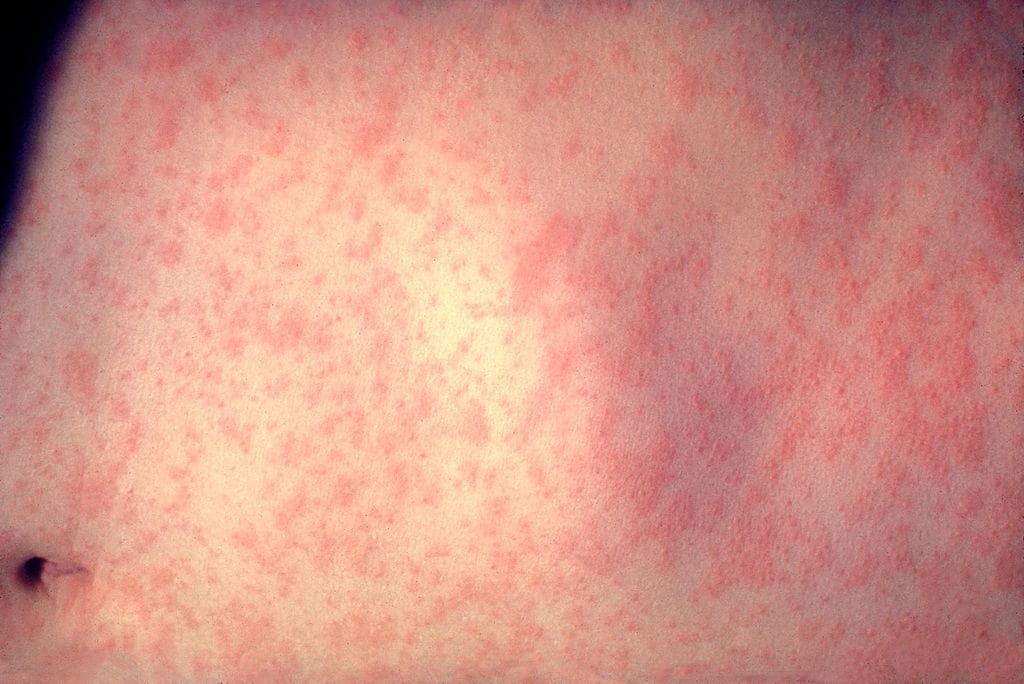
Measles rash on the stomach, showing red maculopapular spots characteristic of viral rashes caused by measles

Measles rash on the stomach, presenting as red maculopapular spots. This distinctive viral rash typically begins on the face before spreading to the body.

A highly contagious viral illness, is characterized by a distinctive red maculopapular  rash that begins on the face and spreads to the body. It’s often preceded by a prodrome of fever, cough, runny nose, and conjunctivitis. A hallmark of measles is the presence of Koplik spots, small white spots with a red halo on the inside of the cheeks.

The diagnosis is confirmed by measles serology as well as sending a nasopharyngeal swab for measles PCR. Complications of measles can include pneumonia, encephalitis, and, in rare cases, sub acute sclerosing panencephalitis (SSPE).[2]


Chickenpox (Varicella)

Chickenpox, caused by the varicella-zoster virus (VZV), is a highly contagious illness characterized by a distinctive rash. The rash typically begins as itchy red bumps that quickly turn into fluid-filled blisters. These blisters eventually crust over and scab.

Other common symptoms of chickenpox include:

  • Fever
  • Fatigue
  • Loss of appetite
  • Headache

While most people recover from chickenpox without complications, severe cases can occur, especially in adults and immunocompromised individuals. In these cases, complications like pneumonia, encephalitis, or bacterial skin infections may develop.[2]


Rubella (German Measles)

Rubella, also known as German measles, is a mild viral illness, particularly in children. It’s characterized by a pinkish, fine rash that starts on the face and spreads to the body. Other symptoms may include:

  • Mild fever
  • Swollen lymph nodes
  • Sore throat

A distinctive feature of rubella is the presence of Forchheimer spots, tiny red spots on the soft palate.

While rubella is generally mild in children, it can have severe consequences for pregnant women. Congenital rubella syndrome, a serious birth defect, can occur if a pregnant woman is infected with rubella.

To prevent congenital rubella syndrome, vaccination against rubella is crucial, especially for women of childbearing age.[2]


Shingles (Herpes Zoster)

Shingles rash caused by a virus, showing red, inflamed skin and crusting, resulting from the reactivation of the varicella-zoster virus

Shingles rash caused by the varicella-zoster virus, a type of viral rash. Red, blistering lesions appear along a nerve pathway, common in viral exanthems.

Shingles, caused by the reactivation of the varicella-zoster virus (VZV), typically affects older adults and people with weakened immune systems. The virus, which causes chickenpox, remains dormant in nerve cells and can reactivate years later.

Symptoms of Shingles include,

  • Painful rash: A painful, blistering rash that usually appears on one side of the body, often following a nerve pathway.
  • Blisters: The rash starts as red, fluid-filled blisters that eventually crust over and heal.
  • Pain: Severe burning or shooting pain that can persist even after the rash clears, known as post-herpetic neuralgia.
  • Other symptoms: Fever, chills, headache, and fatigue.

Complications of Shingles:

  • Post-herpetic neuralgia: Chronic pain that can last for months or even years.
  • Ophthalmic zoster: Involvement of the eye, which can lead to serious eye problems.
  • Bacterial skin infections: Secondary infections can occur, especially in immunocompromised individuals.

Early treatment with antiviral medications can reduce the severity and duration of the illness.


Fifth Disease

Child with fifth disease, also known as erythema infectiosum or slapped cheek disease, showing a bright red rash caused by human parvovirus B19

Fifth disease (erythema infectiosum), a viral illness caused by human parvovirus B19, presenting as a bright red, flushed rash on the cheeks, often called slapped cheek disease

Fifth disease, also known as erythema infectiosum or slapped cheek disease, is a common viral illness, especially in children. It’s caused by the human parvovirus B19 and is highly contagious before the rash appears. Fifth disease spreads through respiratory droplets, such as those produced by coughing or sneezing.[3]

The characteristic symptom is a bright red, flushed appearance on the cheeks, followed by a lacy rash on the trunk and limbs. Mild symptoms like fever, runny nose, and sore throat may precede the rash.

Treatment focuses on managing symptoms, such as fever and discomfort, with over-the-counter medications and plenty of fluids. While fifth disease is usually mild, pregnant women should avoid contact with infected individuals to prevent potential harm to the developing fetus.


Roseola ( Sixth Disease)

Roseola, also known as sixth disease, is a common viral illness that primarily affects young children. Roseola is likely caused by more than one virus, but the most common cause is human herpesvirus 6 (HHV-6).[3]

The main symptom of roseola is a high fever that can last for several days. As the fever subsides, a rash may appear on the trunk, face, arms, and legs. The rash is typically a faint pink colour and may be slightly raised.

While roseola can cause discomfort, it usually resolves on its own without any serious complications. However, in some cases, it can lead to febrile seizures, especially in young children. If you suspect your child has roseola, it’s advisable to consult a paediatrician for proper diagnosis and to rule out other potential causes of fever and rash.


Hand, Foot, and Mouth Disease

Hand, foot, and mouth disease (HFMD) is a common viral infection, primarily affecting young children. It’s caused by enteroviruses, such as Coxsackievirus A16 and Enterovirus 71. The characteristic symptoms of HFMD include:

  • Painful mouth sores: These sores can appear on the tongue, gums, and inner cheeks.
  • Rash: A rash typically develops on the hands, feet, and sometimes the buttocks. The rash often appears as small, red spots that may blister.
  • Fever: Low-grade fever is common.
  • Other symptoms: Sore throat, poor appetite, and irritability.

HFMD is highly contagious and spreads through direct contact with saliva, mucus, or feces from an infected person. While most cases are mild and resolve on their own within a week or two, severe complications can occur, especially in infants and young children. These complications may include meningitis, encephalitis, and heart inflammation.[2]


COVID-19 Rash

COVID-19, a respiratory illness caused by the SARS-CoV-2 virus, can also manifest in various skin conditions. These skin manifestations can range from mild rashes to more serious conditions. Some common skin symptoms associated with COVID-19 include:

  • Maculopapular rash: A red, bumpy rash that can appear anywhere on the body.
  • Urticarial rash: A hive-like rash that can be itchy and uncomfortable.
  • Vesicular rash: A rash with small, fluid-filled blisters.
  • Chilblain-like lesions: Red, itchy, and painful lesions on the fingers and toes, often occurring in colder weather.
  • Petechiae and purpura: Tiny red or purple spots on the skin caused by bleeding under the skin.
  • Livedo reticularis: A lacy, net-like pattern on the skin, often seen on the legs.[4]

It’s important to note that while these skin manifestations can be associated with COVID-19, they can also be caused by other conditions.


Zika Virus Rash

Zika virus is a mosquito-borne illness that can cause a variety of symptoms, including a distinctive rash. The rash associated with Zika virus is often:

  • Maculopapular: A flat, red rash with small, raised bumps.
  • Pruritic: Itchy.
  • Centrifugal: Starting in the canter of the body and spreading outward.

Other symptoms of Zika virus infection may include:

  • Fever
  • Joint pain
  • Muscle pain
  • Headache
  • Conjunctivitis (pink eye)

Many people infected with Zika virus may experience mild or no symptoms at all. However, Associated serious complications like Guillain–Barre syndrome and birth defects if a pregnant woman is infected, can be resulted.[5]


Molluscum Contagiosum

Rash caused by a virus, Molluscum Contagiosum, showing shiny papules with central indentations on the neck, a type of viral exanthem

Viral exanthem rash caused by Molluscum Contagiosum, featuring shiny papules with central indentations, commonly found on areas like the neck.

Molluscum contagiosum is a common, benign skin infection caused by the Molluscum Contagiosum virus (MCV). It often presents as small, flesh-coloured, pearly bumps with a dimple in the centre. These bumps can appear anywhere on the body but are commonly found on the face, trunk, arms, and genitals.

Transmission trough

  • Direct skin-to-skin contact
  • Autoinoculation (scratching can spread the virus to other parts of the body)
  • Sexual contact

While molluscum contagiosum is often self-limiting, treatment may be considered in cases of extensive or persistent lesions. Common treatment options include: Cryotherapy, Curettage, topical medications that blisters the lesions, topical retinoid that can help reduce the number and size of lesions.[6]


Viral rash vs. allergic reaction

Both viral rashes and allergic reactions can present with skin manifestations, but they differ in their underlying causes, symptoms, and treatment approaches.


Table 1: Viral rash and allergic rash comparison.


Feature Viral Rash Allergic Reaction
Cause Viral infection (e.g., measles, rubella, chickenpox) Immune response to allergens (e.g., food, medications, insect stings)
Prodromal Symptoms Fever, malaise, and other flu-like symptoms are common. Itching, respiratory symptoms, or gastrointestinal involvement depending on the allergen.
Onset Sudden onset, often in association with other systemic symptoms. After exposure to a specific allergen, onset can range from minutes to hours.
Area of the Body Affected Central (e.g., trunk) or peripheral (e.g., extremities), depending on the viral infection. Can affect the whole body or localized to the area of allergen exposure (e.g., contact dermatitis).
Itchiness Usually absent, though some (e.g., chickenpox, rubella) may cause itching. Itchiness is typically present and may be severe.
Appearance Bright red or rose-colored rash; may include petechiae or maculopapular lesions. Symmetrical, erythematous, blanching rash; may involve hives or raised, palpable lesions.
Resolution Typically resolves without treatment as the viral infection subsides. Usually resolves within 24-36 hours with appropriate treatment (e.g., antihistamines).
Complications Bacterial superinfection from scratching, particularly in cases like chickenpox. Severe cases may lead to anaphylaxis, a life-threatening reaction requiring immediate medical care.


Diagnosis of viral exanthems


Clinical Diagnosis

In many cases, viral exanthems can be diagnosed based on the characteristic rash and associated symptoms. However, laboratory tests may be necessary to confirm the diagnosis, especially in complex cases or when complications are suspected.


Laboratory Diagnosis

  • Serology: Detects virus-specific antibodies in the blood. Immunoglobulin M (IgM) antibodies indicate acute infection, while immunoglobulin G (IgG) antibodies suggest past infection.
  • Nucleic Acid Testing (NAT): Detects viral genetic material in blood, fluid, or tissue samples. NAT is highly sensitive and specific but may require specialized laboratory techniques.
  • Viral Culture: A traditional method that involves growing the virus in a laboratory, but it’s time-consuming and less sensitive than NAT.
  • Skin Biopsy: Rarely needed, but may be helpful in certain cases to rule out other conditions.[8]

Treatment of viral exanthems


Most viral exanthems are self-limiting and require supportive care. Treatment focuses on relieving symptoms and preventing complications. Key treatment strategies include:

  • Symptom Relief: Over-the-counter medications like acetaminophen or ibuprofen can help reduce fever and pain.
  • Skin Care: Gentle skin care, including avoiding scratching, can help prevent secondary infections.
  • Antiviral Medications: In some cases, antiviral medications may be prescribed to shorten the duration of the illness or reduce the severity of symptoms.

Prevention of Viral Exanthems


To prevent viral exanthems, consider the following:

  • Vaccination: Get vaccinated against preventable viral infections like measles, mumps, rubella, and chickenpox.
  • Hand Hygiene: Wash your hands frequently with soap and water, especially before eating and after using the bathroom.
  • Avoid Close Contact: Stay away from people who are sick.
  • Practice Good Hygiene: Cover your mouth and nose when coughing or sneezing.
  • Insect Repellent: Use insect repellent to protect against mosquito-borne viruses like Zika.[9]

Complications of viral exanthems


While most viral exanthems are mild, complications can occur in some cases, especially in immunocompromised individuals or young children. Potential complications include:

  • Bacterial Skin Infections: Scratching can lead to secondary bacterial infections.
  • Encephalitis: Inflammation of the brain.
  • Pneumonia: Lung infection.

Outlook and prognosis


Most viral exanthems resolve on their own without causing long-term complications. However, it’s important to be aware of potential complications, such as bacterial skin infections, encephalitis, or other systemic illnesses, especially in immunocompromised individuals.

As vaccination rates fluctuate and new viruses emerge, increase population and vectors , the incidence of viral exanthems may vary. With new immunosuppressive treatments being used widely , reactivation rate of latent infections goes up. Therefore, it’s crucial to stay updated on recommended vaccinations and to practice good hygiene to minimize the risk of infection.


References

First Derm ensures the highest quality and accuracy in our articles by using reliable sources. We draw from peer-reviewed studies, academic research institutions, and reputable medical journals. We strictly avoid tertiary references, linking to primary sources such as scientific studies and statistics.

  1. Oakley A. Exanthems. DermNet NZ. Updated September 2015. Available at: https://dermnetnz.org/topics/exanthems. Accessed November 25, 2024.
  1. Ting S, Nixon R. Clinical features of viral exanthems. Aust J Gen Pract. 2021;50(4). doi:10.31128/AJGP-02-20-5246. Available at: https://www1.racgp.org.au/ajgp/2021/april/clinical-features-of-viral-exanthems/. Accessed November 25, 2024.
  2. Ikeda M. Fifth Disease (Parvovirus B19): What Parents Need to Know. American Academy of Pediatrics. Available at: https://www.healthychildren.org/English/health-issues/conditions/skin/Pages/Fifth-Disease-Parvovirus-B19.aspx. Accessed November 25, 2024.
  1. Ting S, Nixon R. Clinical features of viral exanthems. Aust J Gen Pract. 2021;50(4):231-236. doi:10.31128/AJGP-02-20-5246
  2. Martora F, Villani A, Fabbrocini G, Battista T. COVID-19 and cutaneous manifestations: A review of the published literature. J Cosmet Dermatol. 2023;22(1):4-10. doi:10.1111/jocd.15477
  3. Dobson JS, Levell NJ. Spotting Zika spots: descriptive features of the rash used in 66 published cases. Clin Exp Dermatol. 2019;44(1):4-12. doi:10.1111/ced.13733
  1. Meza-Romero R, Navarrete-Dechent C, Downey C. Molluscum contagiosum: an update and review of new perspectives in etiology, diagnosis, and treatment. Clin Cosmet Investig Dermatol. 2019;12:373-381. Published 2019 May 30. doi:10.2147/CCID.S187224
  1. Tsabouri S, Atanaskovic-Markovic M. Skin eruptions in children: Drug hypersensitivity vs viral exanthema. Pediatr Allergy Immunol. 2021;32(5):824-834. doi:10.1111/pai.13485
  1. Keighley CL, Saunderson RB, Kok J, Dwyer DE. Viral exanthems. Curr Opin Infect Dis. 2015;28(2):139-150. doi:10.1097/QCO.0000000000000145
  1. Cleveland Clinic. Viral Exanthem Rash. Last reviewed March 18, 2022. Available at: https://my.clevelandclinic.org/health/diseases/22510-viral-exanthem-rash. Accessed November 25, 2024.

Ask a Dermatologist

Anonymous, fast and secure!

logo
1 (415) 234-4124

boots_menu

Get Checked