Red Penis Rash: Pictures Symptoms Diagnosis & Treatment
Updated on August 10, 2025
Red Penis Rash
Red penis rash is common to occur during someones lifetime and varies with age and setting, it can be many things. Balanitis is one of the most common, and is a natural infection under the foreskin, which is the most common reason for a red penis. It can affect males of all ages, but is most common among uncircumcised adult men. The end of the penis becomes irritated, because of an overgrowth of the bodies natural bacteria and is usually found between the glans and foreskin. It can sometimes be related to the difficulty of keeping the area clean or too much cleanliness, it is therefore important to keep a clean balance.
There are many other common causes to a red penis rash, below you can read more on selected cases with a history, picture and the dermatologists answer.
1. Psoriasis
Online dermatologist question
Red penis rash and the entire skin around, they do not itch or sting. I have had this for a year now.
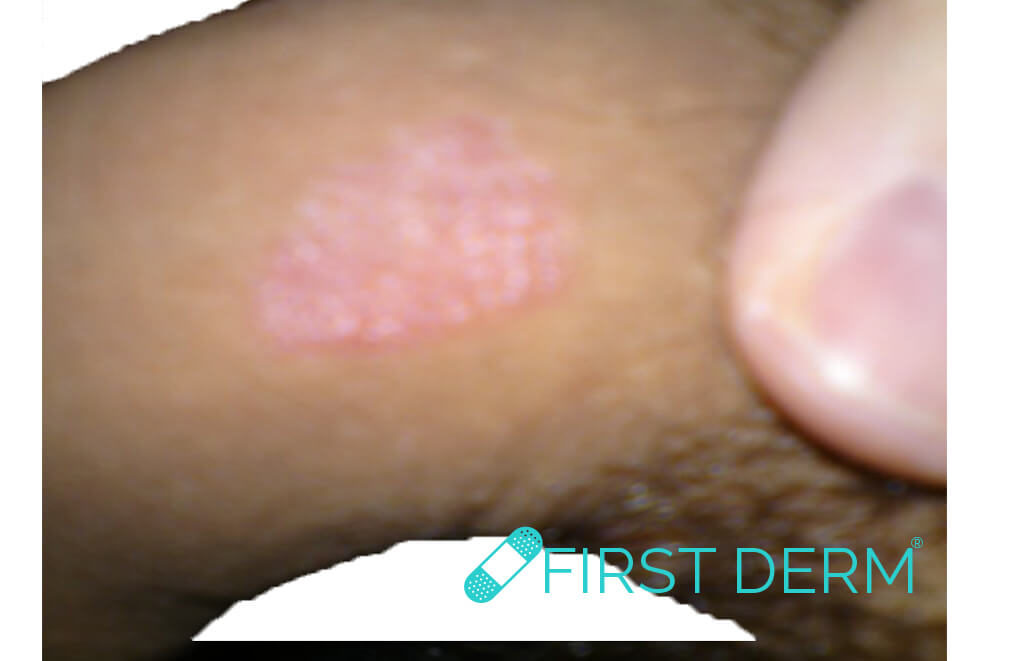
Red Rash on Penis: Psoriasis on Genital Area – Scaly Patch at the Base of the Penis Shaft, Non-Itching and Non-Stinging – Typical of Psoriatic Skin Manifestation
Online dermatologist answer
The rash looks like possibly psoriasis. Psoriasis is a chronic skin condition that causes red, scaly patches. It is not dangerous or contagious, and there are several individual treatment options.
You can test with a non-prescription Daktacort cream:
- Apply twice daily for 1 week
- Then once a day for 1 week
- Then every other day for 1 week
If it doesn’t get better, a stronger cortisone cream is likely needed and the treatment plan should be optimized by your family doctor or dermatologist.
Psoriasis on the penis often lacks thick scale and may look shiny or smooth. Friction, sweat, and harsh soaps can make it worse.
What You Can Do:
-
Try Daktacort with the schedule above
-
Avoid scented soaps; use lukewarm water only
-
Moisturise after washing
-
Avoid friction from tight clothing or activities
When to See a Doctor:
-
If no improvement after 2–3 weeks
-
If it gets worse, cracks, or becomes painful
-
A doctor can prescribe a stronger cream or help tailor treatment
2. Pearly Penile Papules (PPP)
Online dermatologist question
23 year old male. I have had this red rash on the penis for a year now. Itches sometimes usually no trouble. I have tried to self medicate with anti-fungal cream now for two weeks and it has possibly gotten a little better, but I do not know for sure.
Looks like fungus and several bumps — may even turn red on the foreskin sometimes.
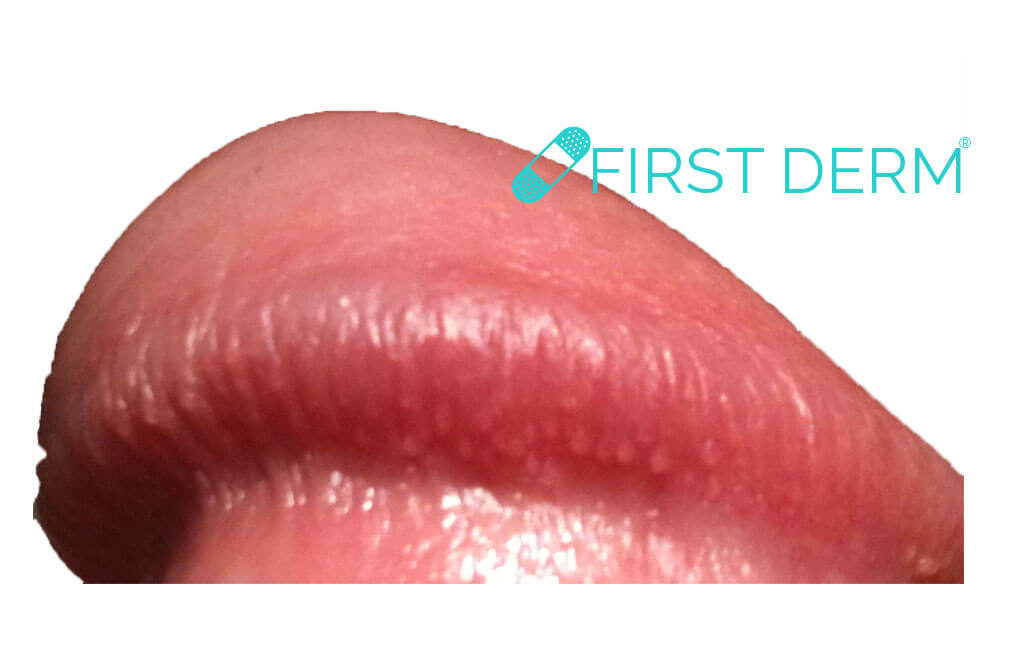
Red Rash and Itching on Glans Penis/Foreskin: Indicative of Possible Balanitis or Irritation Eczema. Accompanied by Normal Sebaceous Glands (Corona Glandis Penis)
Online dermatologist answer
The small bumps are completely normal, called Pearly Penile Papules (PPP), and are normal sebaceous glands. Based on the images, it looks completely normal.
You may have had possible a Balanitis: irritation eczema or inflammation of the glans penis/foreskin that causes itching.
Recommended treatment can be to test with Daktacort cream, which is a combination ointment with mild cortisone and antifungal properties:
2 times/day for one week
Then once a day for a week
Do not wash with soap — use only lukewarm water. I also recommend daily moisturizer cream, especially after water contact. If it does not get better, see your family physician or a dermatologist.
What You Can Do:
-
Apply Daktacort as instructed above
-
Rinse gently with lukewarm water only
-
Moisturize daily to support healing
When to See a Doctor:
-
If the symptoms persist
-
Your doctor can evaluate further and offer prescription treatment if needed
Worried About That Red Rash?
Worried if that red rash is something serious — or even an STD? Get clarity from a board-certified dermatologist in hours, without leaving your home.
✔100% anonymous – Your identity stays private
✔ No clinic visits – Get answers anytime, anywhere
✔ Fast results – Avoid the long wait for in-person care
✔ Clear guidance – Know if it’s minor irritation or needs treatment
Just upload two clear photos with a short symptom description to receive expert insight — all from your phone.
3. Balanitis
Online dermatologist question
I am 23 year old. I had unprotected sex about 6 month ago with an unknown girl… I freaked out right after and washed my penis feverishly with both soap and shampoo for a period… I have been tested for chlamydia but I had nothing. I also self-treated with an anti-fungal cream for a week and then it was temporarily gone, but it came back again… After reading on the internet I only wash with lukewarm water and a washing oil from the pharmacy… This has calmed it a bit, but it has come back… Anything else I can do?
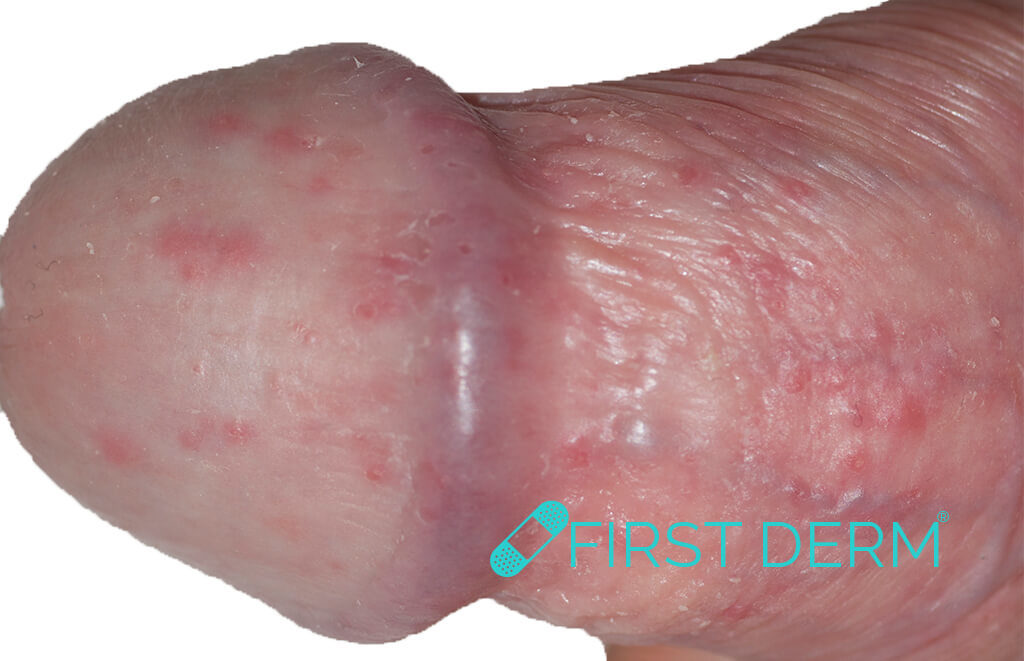
Red spots/rash on penis: symptoms suggestive of balanitis, indicating inflammation or irritated eczema on the glans penis and/or foreskin
Online dermatologist answer
From your history and images, this looks like Balanitis: an irritated eczema or inflammation of the skin on the glans penis and/or foreskin.
It may be itchy, stinging, and some cuts may happen.
Treatment with topical steroids (e.g. hydrocortisone 1%, over-the-counter) is recommended:
-
Twice daily for 1 week
-
Then once daily for 1 week
-
Then once every 2 days for 2 weeks
To avoid recurrences:
-
Use moisturizing cream several times daily
-
Avoid exaggerated hygiene which dries out the skin
-
Use a mild soap and only lukewarm water when washing
-
During sex or masturbation, apply lubricant to avoid friction
If it does not get better, see your family doctor or a dermatologist in person.
What You Can Do:
-
Follow the full steroid application routine as described
-
Switch to non-soap cleansers and lukewarm water
-
Moisturize regularly
-
Use lubricant during sex or masturbation to reduce irritation
When to See a Doctor:
-
If symptoms don’t improve or return repeatedly
-
If cracks, pain, or discharge appear
-
In-person assessment may help clarify the cause and adjust treatment
Get peace of mind with expert advice from our dermatologists while staying fully anonymous. Click the link to get started.
4. Eczema
Case – 1
Online dermatologist question
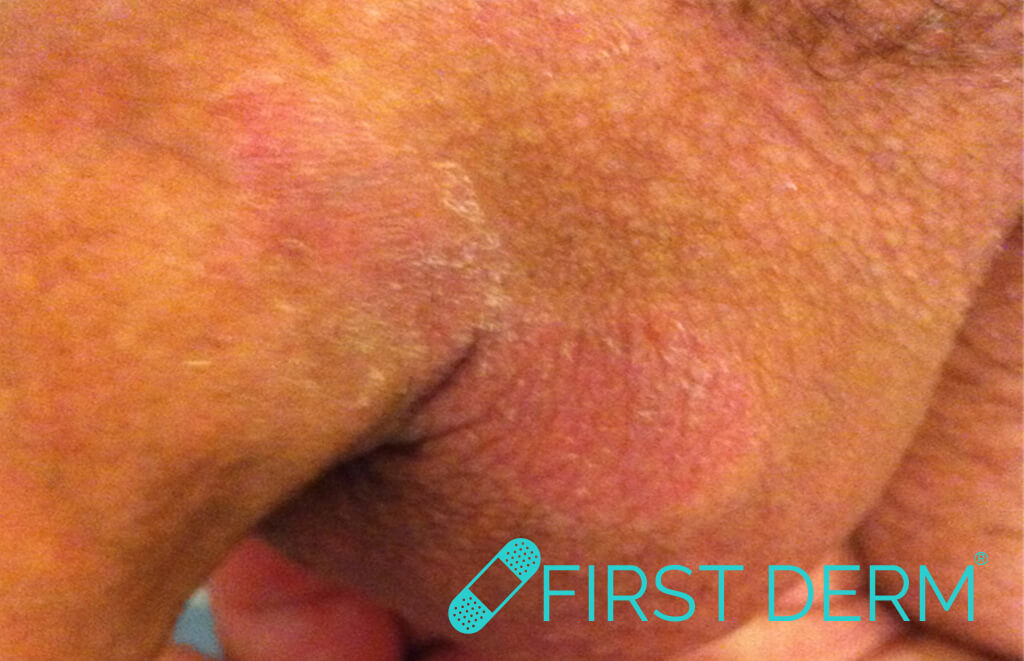
Eczema on Genital Area: Reddish patches on penis root and a round patch on the scrotum, each indicating typical symptoms of eczema such as inflammation, dryness, and skin irritation
Normally pink red as in the picture but peels sometimes too. The red patch on the scrotum is round an inch in diameter and the one the penis root is oval. Then I have a blemish in the groin that also itches. It is a bit darker and an inch in diameter.
Online dermatologist answer
Based on the information and images submitted, this looks like eczema — an inflammation of the skin causing dryness and irritation. It is very common.
You can treat this with over-the-counter hydrocortisone ointment:
-
Morning and evening for 1 week
-
Then once daily for 1 week
It is important to apply a moisturizer daily, especially after water contact (e.g., after a shower or bath). If there is no improvement, see your family doctor for further assessment.
What You Can Do:
-
Use OTC hydrocortisone ointment as directed
-
Apply a fragrance-free moisturizer regularly
-
Avoid harsh soaps and hot water
-
Keep the area dry and well-ventilated
When to See a Doctor:
-
If symptoms do not improve within two weeks
-
If the area becomes cracked, painful, or infected
-
Your doctor may suggest a stronger steroid or assess for secondary causes
Case -2
Severe Eczema
Online dermatologist question
Hello I have had a red penis rash that can be itchy, that some time stings for almost 3 weeks. It started mildly then it has gotten worse, now the whole penis is red and flaking and when I scratch it, it breaks the skin and it stings. Sometimes some liquid appears and it gets a bit “wet”. The itching gets really bad when I sweat, especially at the gym, then it can start to itch terribly. Now it looks like it has started to scar where the skin is cracked. What can I do? Thanks in advance.
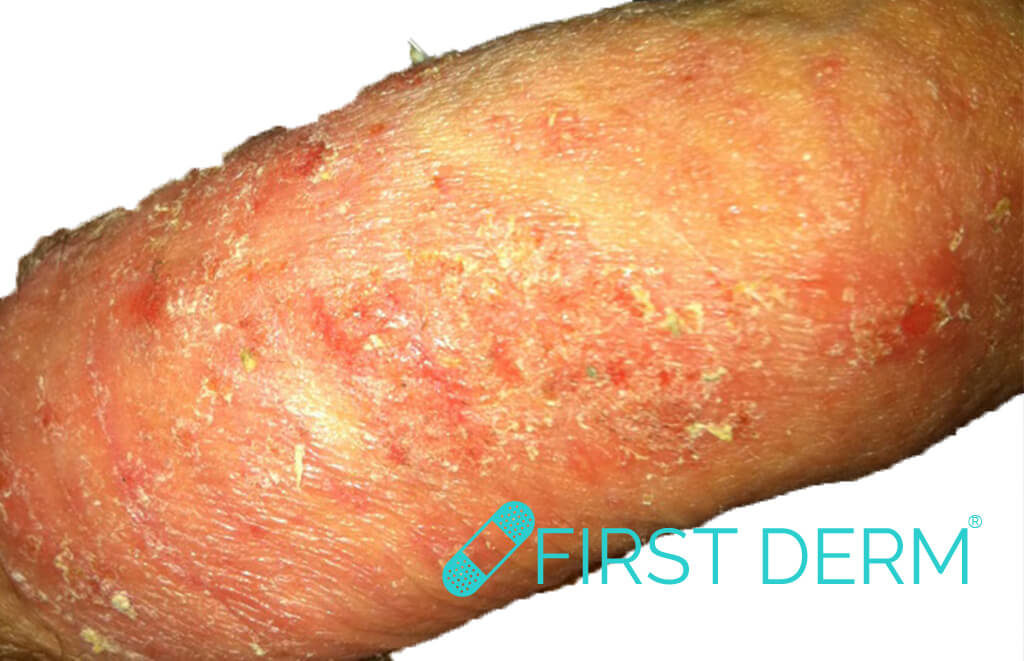
Severe Eczema on Penis: Extensive red rash causing itching and stinging, with flaking skin. Scratching leads to skin breakage and potential scarring, suggesting grave eczema that may be infected
Online dermatologist answer
This looks primarily like grave eczema. You need strong cortisone to break the circle of itching.
If you have strong cortisone at home, use it:
-
Twice a day for a week
-
Then once a day thereafter
Also use plenty of moisturizer, especially after contact with water. The eczema could be infected too.
I would advise that you see your primary care physician and get an assessment and a treatment plan.
What You Can Do:
-
Apply strong corticosteroid (if available) as described
-
Moisturize regularly, particularly after showers
-
Avoid scratching — use cold compresses to relieve itch
-
Wear loose-fitting clothing during workouts to reduce sweating and friction
When to See a Doctor:
-
If the eczema is worsening or cracked skin is scarring
-
If you suspect infection (oozing, crusting, heat)
-
A doctor can prescribe stronger medication and rule out other causes
5. Genital Herpes
Online dermatologist question
Hi I am 30 years and I have a question about my red penis rash that I get now and then, that can last for a few weeks, before getting back to normal. First the skin is dry and flaky, which can be rubbed off, which leaves the skin underneath red, and a bit irritated. In the last 6 months I have had unprotected sex. I have tested for syphilis and other venereal disease that can cause a rash on the penis, with negative results. My primary care doctor thought it was a fungal infection and gave me daktacort cream that has helped. I am looking for reassurance.
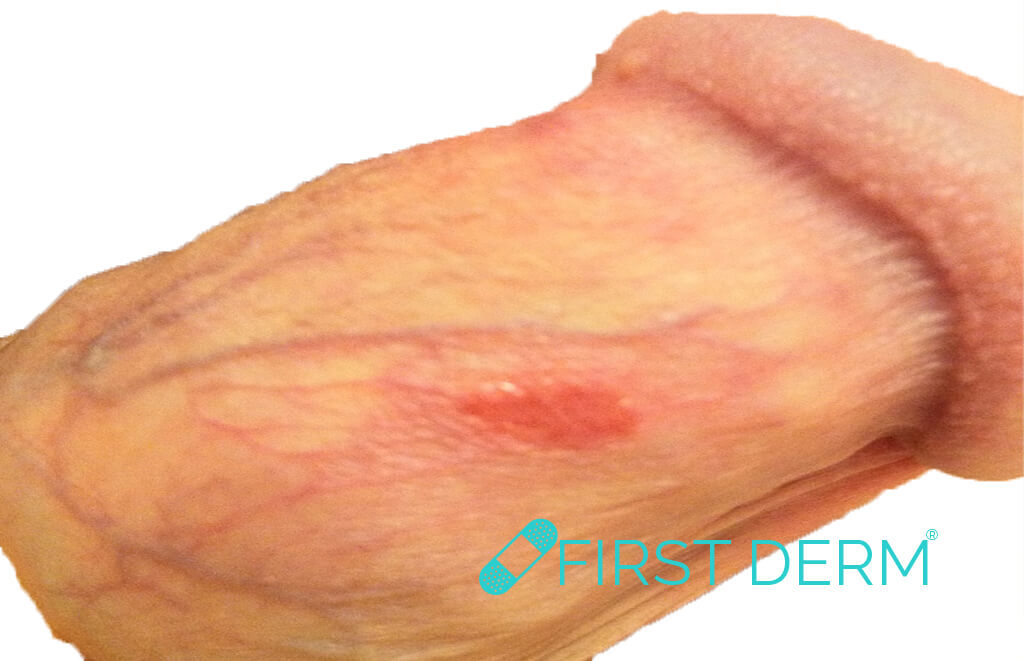
Red Penis Rash with Dry, Flaky Skin: Underlying Skin Appears Red and Irritated Upon Rubbing Off Flakes. Recurrent Episodes Suggestive of Genital Herpes, a Sexually Transmitted Disease Caused by Herpes Simplex Virus Type 1 or 2
Online dermatologist answer
This looks possibly like genital herpes, given that it comes from time to time and lasts about a week.
The infection is caused by the Herpes simplex virus type 1 or 2, which is a sexually transmitted disease.
I recommend you contact an STD clinic for further testing, especially when you have visible sores. Treatment and additional information can be provided at the clinic.
Fungal infections and balanitis (inflammation of the penis head/foreskin) rarely look like this and are rare on the penis shaft alone.
What You Can Do:
-
Keep the area clean and avoid friction
-
Avoid self-treatment during outbreaks
-
Do not apply antifungals or steroids without a clear diagnosis
-
Avoid sexual contact until symptoms are resolved
When to See a Doctor:
-
If the rash returns repeatedly
-
When visible sores or blisters appear
-
Visit a local STD clinic for proper testing and antiviral treatment
Worried About That Red Rash?
Worried if that red rash is something serious — or even an STD? Get clarity from a board-certified dermatologist in hours, without leaving your home.
✔100% anonymous – Your identity stays private
✔ No clinic visits – Get answers anytime, anywhere
✔ Fast results – Avoid the long wait for in-person care
✔ Clear guidance – Know if it’s minor irritation or needs treatment
Just upload two clear photos with a short symptom description to receive expert insight — all from your phone.
6. Contact Dermatitis
Online dermatologist question
Right side of penis shaft and right side of scrotum very red. No pain, no discomfort, no itching, no discharge, no outbreaks before or after a week of using topical cream called Lemon Balm blister soothing salve, made by Urban ReLeaf. Last sexual contact about one month ago. Noticed redness about two weeks ago. Currently having Gainswave Treatments weekly at a men’s health facility and used vacuum pump with silicone lubricant after each of two treatments. First indication of redness after second treatment, two weeks back to back. Put 3rd Gainwave treatment on hold until condition resolves.

Contact dermatitis on the penis shaft and scrotum: Red, irritated skin following use of a topical balm and vacuum pump therapy. A common non-infectious cause of penile rash.
Online dermatologist answer
Based on your description and the images, this appears to be Contact Dermatitis—a form of skin inflammation caused by contact with irritants (e.g. lubricants, topical creams) or allergens (e.g. fragrances, preservatives).
Common Symptoms
Try these over-the-counter remedies, available at most pharmacies:
-
Stop using the suspected irritant or cream (e.g. lemon balm salve or silicone lubricant).
-
Apply 1% Hydrocortisone cream:
– Twice daily for 1 week
– Then once daily for 1 week
– Then once every other day for 2 more weeks -
Take Zyrtec (cetirizine) 10 mg twice daily for a week if itching is present.
-
Use moisturizers regularly (e.g. Cerave, Vaseline) to help restore the skin barrier.
Avoid over-washing or using harsh soaps. Stick to lukewarm water and gentle, fragrance-free cleansers.
When to See a Doctor
-
If symptoms persist beyond 10 days despite treatment
-
If the rash worsens, spreads, or develops cracks, discharge, or pain
-
For a prescription-strength cream if OTC treatments aren’t enough
7. Yeast Infection (Candidal Balanitis)
Online dermatologist question
What is this does not hurt or itch no discharge

Candidal balanitis: A yeast infection causing redness and inflammation near the glans, often triggered by moisture, diabetes, or antibiotic use.
Online dermatologist answer
Based on your description and images, this could be Candidal Balanitis—a type of yeast infection caused by the overgrowth of Candida fungus on the head (glans) of the penis.
What Is Candidal Balanitis?
Candidiasis is a fungal skin infection that can affect various parts of the body—including the genital area. When it affects the penis, it’s known as Candidal Balanitis. While it often causes redness, itching, or discomfort, some cases may not itch or hurt—especially in early or mild stages.
Contributing factors include:
-
Moisture and poor ventilation
-
Diabetes or weakened immune system
-
Use of antibiotics or corticosteroids
-
Friction or poor hygiene
What You Can Do at Home
You can try the following over-the-counter treatments:
-
2% Miconazole Nitrate cream (antifungal):
Apply twice daily for 2 weeks -
1% Hydrocortisone cream (mild steroid):
Apply twice daily for 2–3 days only, then stop -
Optional: Gentian violet 1% may also help as a topical antifungal
Also:
-
Keep the area clean and dry
-
Avoid tight clothing and friction
-
Wash with lukewarm water and mild soap
These treatments are usually effective, but always follow instructions carefully.
When to See a Doctor:
-
If there is no improvement after two weeks of treatment
-
If symptoms worsen, spread, or cause discomfort
-
If you have underlying conditions such as diabetes, consult a healthcare provider
8. Lichen Planus (Genital)
Online dermatologist question
I’ve noticed some marks on my penis. They don’t itch or hurt, but they worry me. I tried using Cortizone cream on my own — it helps for a few days, but then the marks come back. I’d like to know what this could be and if there’s a better or more permanent treatment. Thank you.

Lichen planus on the penis with flat, violaceous lesions near the glans and shaft — a chronic inflammatory condition that may persist or recur
Online dermatologist answer
From your description and images, this looks like Lichen Planus — a chronic inflammatory skin condition caused by an immune response, not an infection.
In men, lichen planus can affect the shaft, foreskin, or head of the penis, appearing as slightly raised, reddish to violaceous patches. These marks may not hurt or itch, but can be persistent or occasionally flare up.
What You Can Do at Home
You can start with over-the-counter 1% hydrocortisone cream:
-
Apply twice daily for 1 week
-
Then once daily for 1 week
-
Continue every other day for 2 more weeks
Avoid scratching or friction in the area, as trauma may trigger new lesions (Koebner phenomenon).
Note: Cortisone may offer temporary relief, but stronger prescription creams may be needed for lasting results.
When to See a Doctor
-
If symptoms don’t improve after 2–3 weeks
-
If lesions worsen or spread
-
To rule out other conditions like genital psoriasis or confirm the diagnosis
Lichen planus is not contagious, and while its exact cause is unclear, it often resolves on its own over time.
9. Molluscum Contagiosum
Online dermatologist question
It’s been there for about 3 weeks. It doesn’t itch or anything.

Molluscum contagiosum on the inner groin – small, red, dome-shaped lesions with a central indentation caused by a poxvirus.
Online dermatologist answer
Based on your image and the description, this appears to be Molluscum Contagiosum — a common, benign but contagious skin condition caused by a poxvirus.
In the genital area, molluscum is often considered a sexually transmitted infection (STI). It spreads through direct skin-to-skin contact or by sharing contaminated objects like towels or clothing.
What It Looks Like:
-
Small, shiny, skin-colored or pink bumps
-
Central indentation (dimple) is common
-
Usually painless and not itchy
What You Can Do:
-
Do not scratch the lesions to prevent spreading.
-
Avoid shaving the area until cleared.
-
Over-the-counter options like Molluscum topical solutions (e.g., Molusk dermal) may help in mild cases.
Medical Treatment Options:
-
Cryotherapy (freezing)
-
Curettage (gentle scraping by a dermatologist)
-
Topical treatments prescribed by a doctor
When to See a Doctor
-
If lesions spread, persist beyond a few months, or become irritated
-
To confirm the diagnosis and rule out genital warts caused by HPV, which can appear similar but require different long-term monitoring
A trained dermatologist can differentiate Molluscum from warts through close inspection and texture evaluation. In people with healthy immune systems, the condition often resolves on its own over several months, but professional treatment can speed recovery and limit transmission.
10. Scabies (Nodular Genital Scabies)
Online dermatologist question
Itchy red bumps appears da few months ago. They started on the inside of my legs, then moved to groin and penis and then across my body. Bumps spread to chest, arms and back. Currently symptoms are much better and have largely disappeared from chest and back but some spots remain on arms and have continued on penis. Bumps are itchy, they don’t form a head, pop or ooze. They look like mosquito bites but last for weeks or months. I have been treated twice for scabies. Itchier at night or when exposed to hot water

Scabies on the penis: Persistent red bumps caused by an immune reaction to mite parts, commonly appearing in the genital area.
Based on your history and the images provided, this is consistent with nodular scabies—a persistent form of scabies that can continue to cause symptoms even after initial treatment.
Nodular scabies typically presents as red, intensely itchy bumps (nodules) that are especially common on the genital skin, including the scrotum and penis. These bumps often resemble mosquito bites, last for weeks or months, and are most bothersome at night or after hot showers. The reaction is due to an ongoing immune response to mite remnants or antigens lodged in the skin—even if the infestation has already been treated.
What You Can Do
To reduce inflammation and itching at home:
-
Apply 1% hydrocortisone ointment twice daily for one week
-
Then reduce to once daily for another week
-
Avoid scratching, as this can worsen inflammation
If symptoms persist, it’s best to consult a dermatologist. Treatment options like prescription-strength topical steroids, intralesional steroid injections, or topical tacrolimus may be required for full resolution.
When to See a Doctor
-
If bumps remain after completing over-the-counter steroid treatment
-
If itching worsens or spreads to new areas
-
For evaluation of alternative causes or prescription therapies
Nodular scabies is not dangerous, but professional management may be necessary for complete relief.
11. Genital Warts (HPV)
Online dermatologist question
I noticed a small cluster of skin-colored to slightly grayish bumps at the base of my penis about one month ago after trimming my pubic hair. I left it alone and didn’t touch it or mess with it. There are around 3–6 larger bumps and a few smaller ones within a 1-inch area. They’re soft, smooth, not painful or itchy, and haven’t changed in size or number since I first noticed them. I trim the area monthly and have done so for years with no issues before this. No new partners — I’ve been in a monogamous relationship for 18 months.

Genital warts (condyloma) in the pubic area – soft, flesh-toned bumps caused by the human papillomavirus (HPV). Commonly spread through sexual contact.
Online Dermatologist Answer
Based on the information and images of your pubic area, this appears to be genital warts (condyloma acuminata) — a skin condition caused by the human papillomavirus (HPV).
Genital warts are a form of sexually transmitted infection (STI). They often appear as flesh-colored or grayish soft bumps, sometimes clustered, and may resemble a cauliflower-like texture on the surface. These lesions are typically painless and non-itchy and may go unnoticed without close inspection.
What You Can Do
-
Avoid touching, scratching, or shaving over the bumps to prevent irritation or spread.
-
Use condoms during intercourse to reduce the risk of transmission to a partner.
-
Monitor the lesions — while some may resolve on their own, others can persist or spread.
When to See a Doctor
-
A dermatologist or STI clinic can confirm the diagnosis through a close examination.
-
Treatment options include freezing with liquid nitrogen (cryotherapy), topical treatments, or minor surgical removal, depending on the size and location.
-
HPV vaccination may also be discussed as a preventive measure.
Genital warts are manageable and treatable. A professional assessment will guide you toward the most effective care.
Medical Disclaimer:
This article is for informational purposes only and does not replace professional medical advice, diagnosis, or treatment. Always consult a healthcare provider for concerns about your health.
Ask a Dermatologist
Anonymous, fast and secure!
References
First Derm ensures the highest quality and accuracy in our articles by using reliable sources. We draw from peer-reviewed studies, academic research institutions, and reputable medical journals. We strictly avoid tertiary references, linking to primary sources such as scientific studies and statistics.
- Prevalence of Pubic Hair Grooming–Related Injuries and Identification of High-Risk Individuals in the United States. Matthew D et al. JAMA Dermatol. 2017 Nov; 153(11): 1114–1121

Ask a Dermatologist
Anonymous, fast and secure

The Specialist doctor from the University Hospital in Gothenburg, alumnus UC Berkeley. My doctoral dissertation is about Digital Health and I have published 5 scientific articles in teledermatology and artificial intelligence and others.