Itchy Rash Pictures, Causes and Treatment
![Lichen planus (16) buk [ICD-10 L43.9]](https://www.firstderm.com/wp-content/uploads/Lichen-planus-16-buk-ICD-10-L43.9-e1594386051337.jpg)
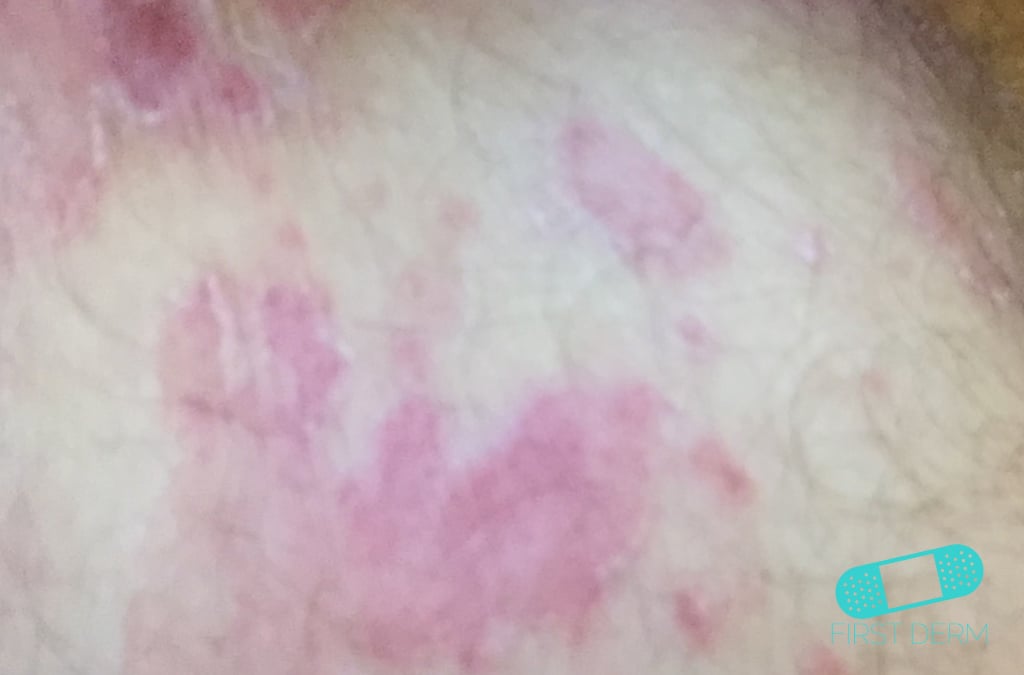
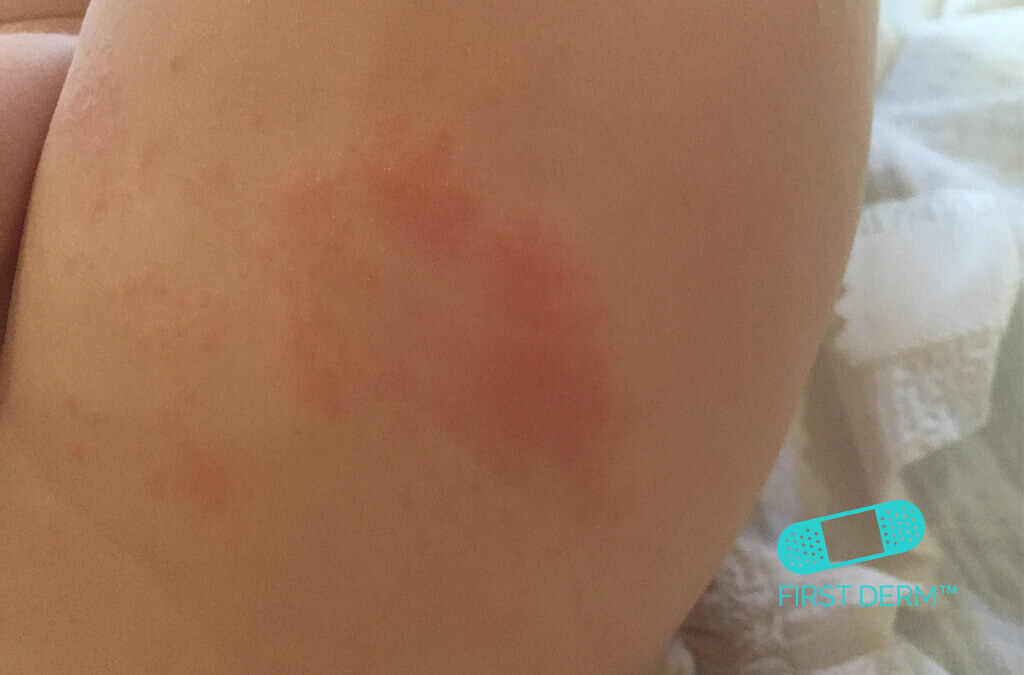
![Psoriasis (18) mage [ICD-10 L40.9]](https://www.firstderm.com/wp-content/uploads/Psoriasis-18-abdomen-ICD-10-L40.9-1.jpg)
![Intertrigo (08) hud [ICD-10 L30.4]](https://www.firstderm.com/wp-content/uploads/Intertrigo-08-hud-ICD-10-L30.4.jpg)
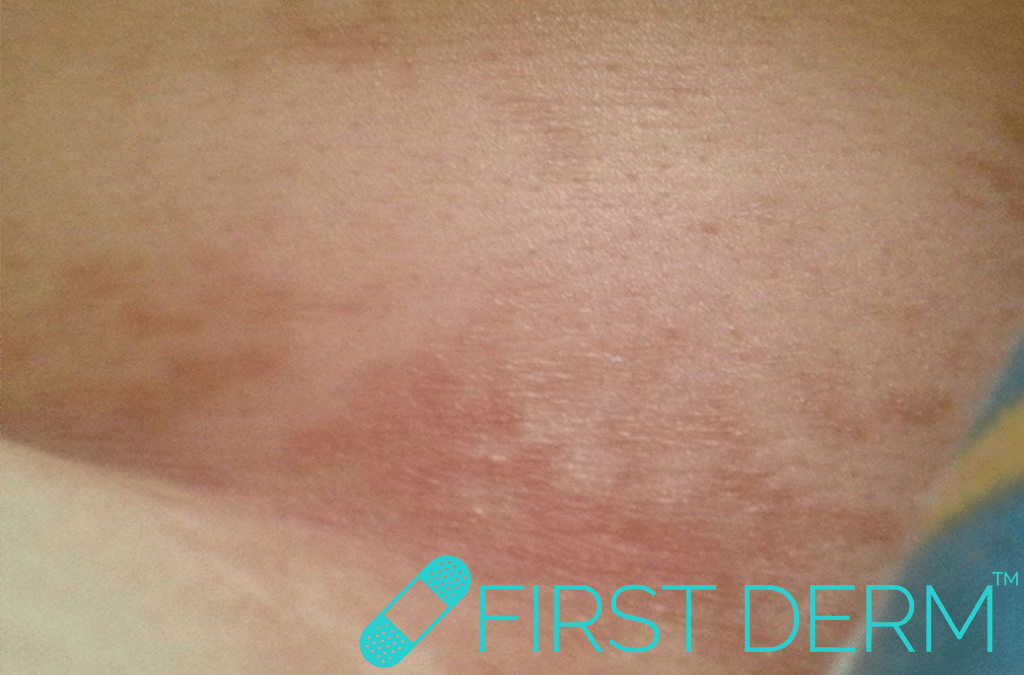
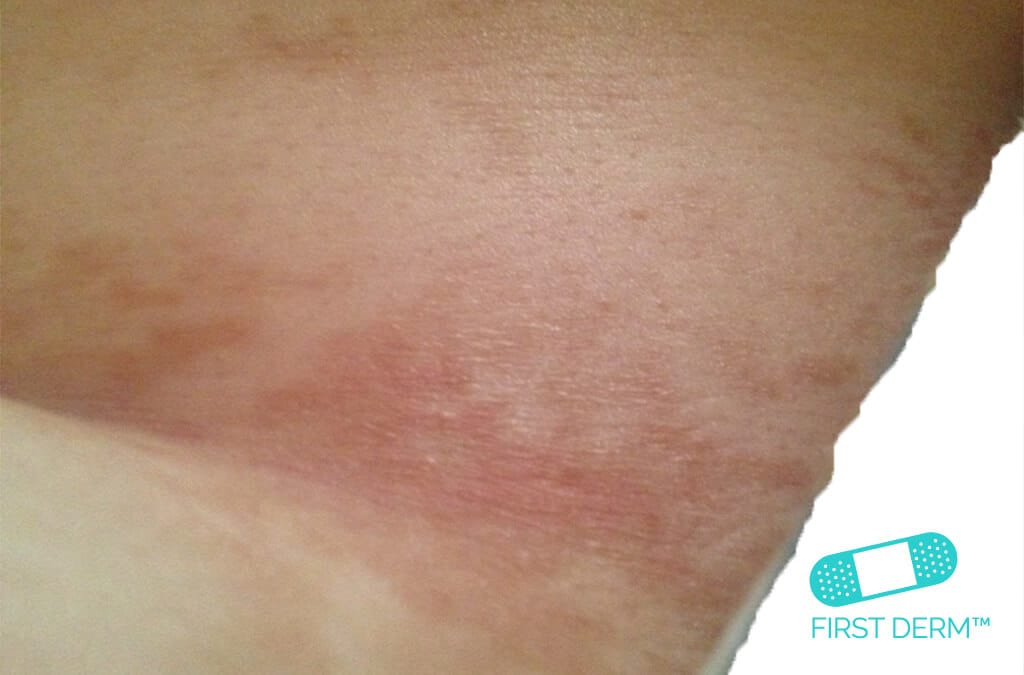
![Scabies (18) arm [ICD-10 B86]](https://www.firstderm.com/wp-content/uploads/Scabies-18-arm-ICD-10-B86.jpg)
Have you ever wondered what that red mark or spot is on your skin? The dreaded rash is something that we are all keen to avoid. They come in many different forms, sometimes gradually sometimes without warning. Not only do they vary greatly, their cause could range from nothing to something serious. Unfortunately, rashes are a part of our life whether we like it or not. However, it doesn’t harm us to understand their cause.
Contents
- Non-Infectious Rashes
- Infectious Rashes
- Viral Rashes
- Should I Seek Medical Advice?
- Itchy Rash Treatment

What Is A Rash?
A rash is usually a red mark on the surface of the skin. They can be caused by a host of reasons and we’ll dig into that a little later. In all, a rash is a reaction to something. It could become swollen, red and even blister. Regardless, this is your body reacting to something it doesn’t like. Your body does not produce a rash because its happy!
Genetics can also play a part in your the rashes you get. Depending on your genes you could be more sensitive to certain environmental factors, foods or otherwise. It’s also worth pointing out that ‘rash’ is not a specific diagnosis. It simply refers to any sort of inflammation or discoloration that distorts the skins normal appearance.
Rashes are Common
Skin disease is one of the leading causes of global disease burden, affecting millions of people world wide. Aging, environmental and genetic factors, and trauma can result in the development of a diverse set of skin diseases, with over 3000 entities identified in the literature.
Patients with skin diseases make up about 6% (in Children < 15 years of age 9%) of the patients seeking in primary care, where most skin diseases can also be dealt with. Skin symptoms can be part of systemic diseases and a holistic approach is important as well as a good collaboration between skin specialist, primary health care and other disciplines.
Use DICDOC.AI for guidance on a possible STD
What Causes That Itchy Rash?
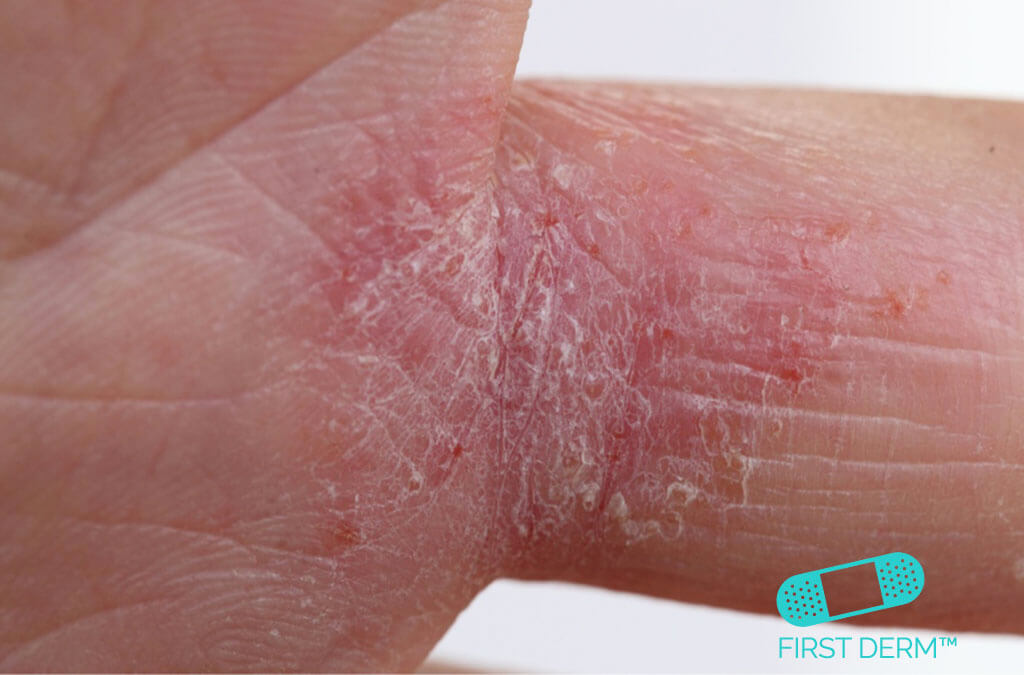
Atopic Dermatitis – Finger
The cause of your rash could be due to a plethora of conditions. Rashes are not easy to diagnose and in some cases even doctors struggle to diagnose correctly. We would always recommend speaking to a board-certified dermatologist if you have a persistent rash. Equally, we have created artificial intelligence that allows you to search for potential skin rash causes. Simply upload an image and we provide the results.
Check Rashes at Home
Outbreaks of rashes that are itchy, red, spots or bumps on the skin are very common and have many different causes. If you have an outbreak, you need to do some itchy rash “investigation” yourself.
There are a few things to consider before talking to a doctor. Firstly, did you come into contact with something unusual recently? This can include both natural materials (such as fruit or leaves) and artificial materials (like household chemicals) or work related (nickel). Anything unusual?
Maybe you ate fruit that you do not usually eat or used a new cosmetic or detergent product? Any of these, you likely have an allergy-related rash. An online dermatologist can confirm a case of an allergy-related rash in just a few hours.
What About The Itching
Itching is an unpleasant sensation where the skin signals a reflex response to tearing of the skin. Modern research has shown that an itch has many similarities to pain, where both feelings are unpleasant, but the behavioral patterns differ. Pain creates a pain-reflex and itching creates a tearing of the skin reflex.
Itching can also come out from pain; for example in case of excessive heat or electrical stimulation. Examples of causes may include insect stings, mosquito bites or allergies, that triggers the skin’s nerve system to send signals of irritation. Itching starts when there is a skin symptom, and applies to any kind of stimulation of the nerve terminals (nociceptors) in the epidermis (outer skin layer). Itching of the nose, eyes and ears can also occur and can be caused by allergic rhinitis.
An itch most common cause, is dehydration of the skin. Dry skin makes it susceptible for itching – stress, excessive bathing/showering and cold weather can worsen it.
Is this what you have? Try our FREE Skin Image Search today and get peace of mind
To help us understand what causes rashes we’re going to split into 2: Non-infectious rashes and infectious rashes. From there you can read more about a range of rashes that could potentially affect, or be affecting you.
Non-Infectious Rashes
These rashes are some of the most common and are caused by a variety of reasons. In some cases it could simply be due to skin hydration, others it could be an allergy. Either way these rashes are non infectious rashes – they aren’t viral, fungal, bacterial or parasitic.
- Dermatitis – This is one of the most common forms of dry skin and rashes. There are many types such as:
- Psoriasis
- Hives
Most non-infectious rashes are a form of dermatitis but there are other conditions such as hives (urticaria) which could be caused by an allergy. Remember we’re only really scratching the surface here so if you’re unable to see a rash that matches your condition, remember to speak to our dermatologists.
Try our FREE search engine on skin diseases
Pictures and Diagnosis of Non-Infectious Rashes
1. Atopic Dermatitis (severe itching)
Online dermatologist question
My son David age 10 in photos. Picture of right inside elbow crease, he has eczema. Allergic to pollen, dust mites, dander, milk protein. The rash is itchy and rough on the left elbow and right armpit as well. A few other patches on his body. It comes and goes in terms of severity. We don’t want to use steroids. What about new Eucrisa cream?
Itchy skin Atopic dermatitis eczema in Children
Online dermatologist answer
Thank you for sending your son’s case. Based on the information and images of your son’s arm, this is consistent with ATOPIC ECZEMA: Atopic dermatitis is very common in children but can persist into adulthood in some cases.
It often affects sites like the flexures of the big joints (skin folds cush as the knee, elbows, neck, etc), but it can be found anywhere on the body surface. This condition causes itchy inflammation of the skin with red, dry patches which sometimes lead to cracking of the skin. In some cases, multiple small blisters can appear.
Treatment
Bacterial infections can also add to the problem. At-home treatment options include: avoiding substances that may be irritants (e.g. excessive showering/bathing), applying over-the-counter 1% hydrocortisone cream (twice daily for a week, then once daily for another week and then every other day for 2 weeks) plus frequent application of a moisturizing cream. If it doesn’t improve, see a dermatologist in person since more potent steroid creams requiring a prescription may be needed.
You have a specific question about Eucrisa cream. It may well be effective for your son, but in the clinical trials only around 1 in 3 people showed a significant improvement after a month (compared with 1 in 5 people on placebo). I would not recommend that you say ‘never’ to topical steroids. In my practice, topical steroid creams are more effective than 1 in 3 and can also be used very safely long term if used correctly.
Is this what you have? Try our FREE Skin Image Search today and get peace of mind
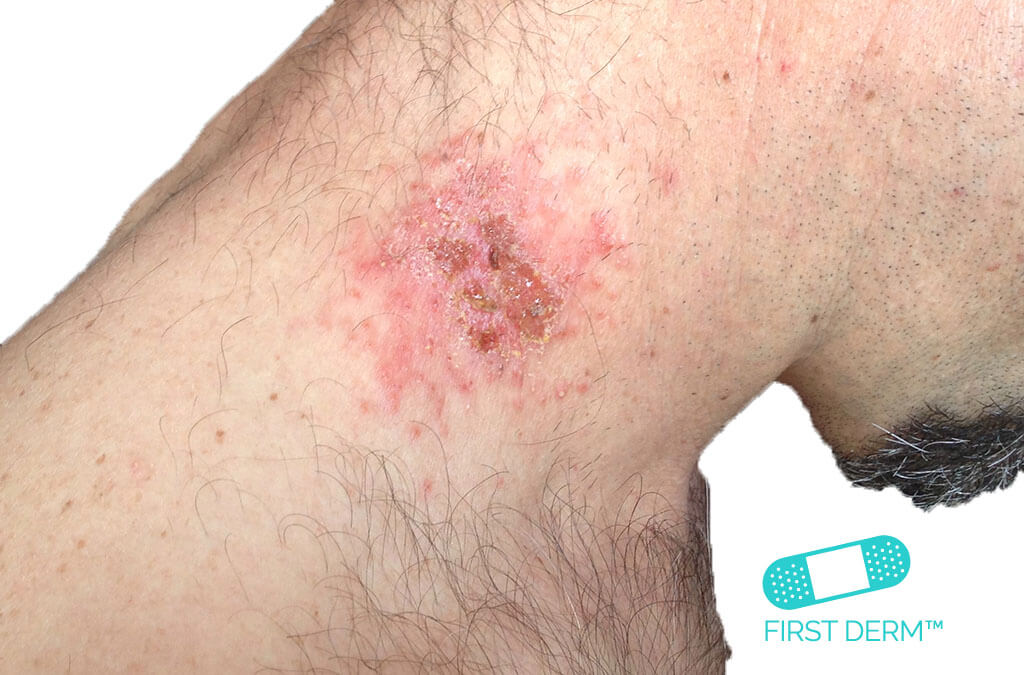
2. Nummular Eczema
Online dermatologist question
39 years old male. Right side of neck, 3×3 inch rash with blisters. Had for approximately 6 days.
Online dermatologist answer
Thank you for sending your case. Based on the information and images of your neck, this is possibly a ECZEMA NUMMULARIS: Nummular dermatitis is a type of eczema with coin-shaped red and slightly scaly skin lesions with pruriitus (itching). Nummular dermatitis is often caused by dry skin. Moisturizing cream and a topical steroid applied twice daily would be recommended.
Treatment
A potent steroid cream may be needed to clear the lesions, which will require a prescription from your dermatologist or family doctor. The treatment should be applied during at least 4-6 weeks lowering the dose every 1-2 weeks. It is of utmost importance that you avoid scratching as this only makes the inflammation worse. In your case it looks like you have a secondary infected and you would needs to do a culture before treatment with oral antibiotics. I would recommend that you see your primary care doctor or a dermatologist to do further tests.
Is this what you have? Try our FREE Skin Image Search today and get peace of mind
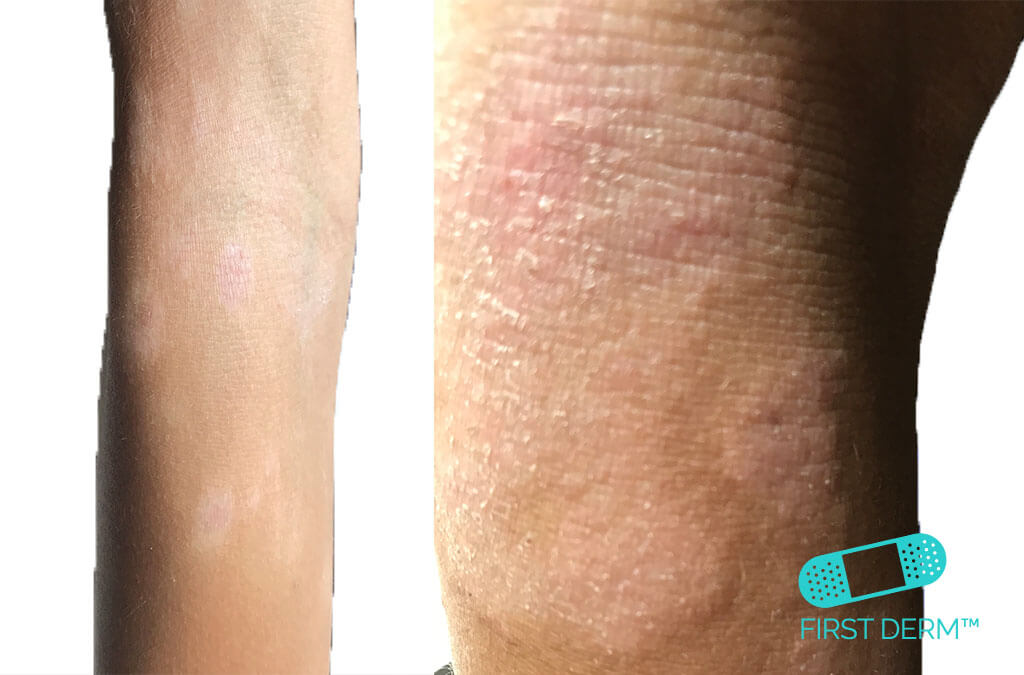
3. Neurodermitis
Online dermatologist question
27 years old female. The spot has been on the inside of my left thigh for over a year now. It itches constantly and is now showing up a few inches above my knee on my left thigh as well. There is nothing on my right leg or anywhere else.
Neurodermatitis on the thigh and knee
Online dermatologist answer
Based on the information and images, possibly NEURODERMATITIS, a specific form of eczema. In this condition it´s quite frequent to only develop one single very dry and itchy spot like in your case. It´s not dangerous but the itching can get quite troublesome as you describe. The most important thing is to break the vicious circle of itching-scratching.
Treatment
The treatment of choice in most cases is stronger cortisone creams several times daily in the begining and then try to withdraw slowly according to certain withdrawl schedules. If the itching is extremely intense oral antihistamines can be added during the initial phases of treatment.
Is this what you have? Try our FREE Skin Image Search today and get peace of mind
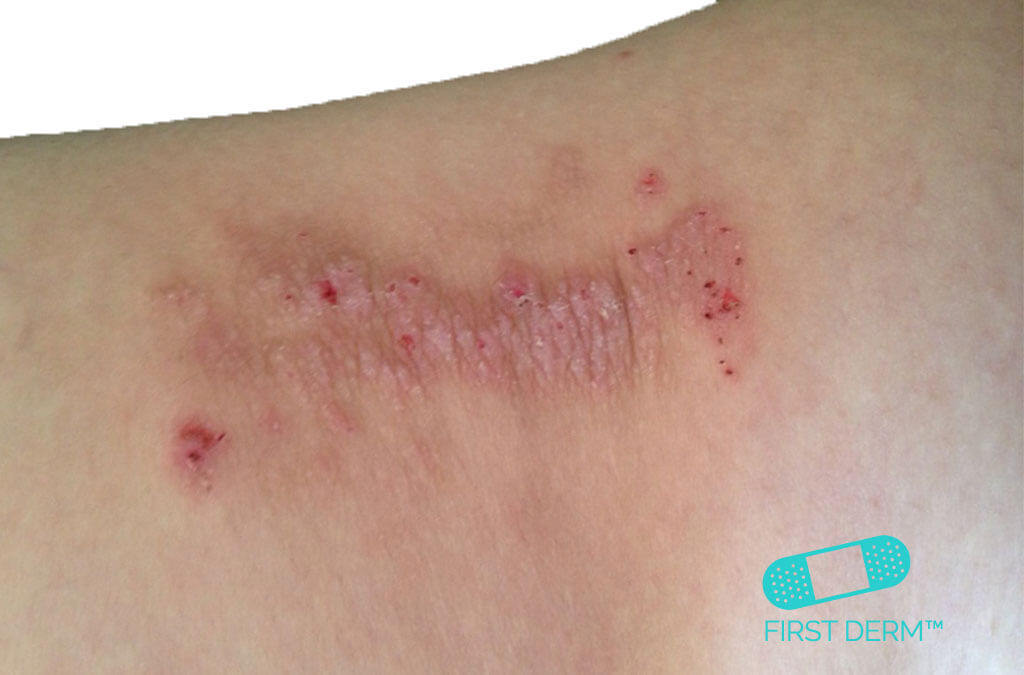
4. Lichen ruber planus
Online dermatologist question
40 years old female. Top of left foot and a couple underneath, top of right foot, left calf affected bad, right calf barely affected. No other affected areas on the body. I have had this for 8 months and it hurts, itches, and is UGLY. Previously, I used antifungal thinking it was ringworm and it seemed to work, until it didn’t anymore.
Rash – Lichen Ruber Planus on Foot
Online dermatologist answer
Thank you for sending your case. Based on the information and images, this is possibly a LICHEN RUBER PLANUS. Lichen planus (a.k.a. lichen ruber) is a chronic inflammatory condition of the skin, which can affect a number of body parts.
Common locations are the underside of the forearms, wrists, legs and the inside of the cheeks, but it can also affect both men and women in the genital area. The lesions are commonly slightly raised and reddish-violaceous in color. Itching is not uncommon and can be quite stubborn. Trauma in the area can sometimes cause more lesions to appear (a so-called Koebner phenomenon) so it is important to avoid scratching.
Treatment
Lichen planus can be treated with topical steroid creams but over-the-counter Hydrocortisone 1% is is most cases not sufficient. Stronger steroid creams that requires a prescription are usually needed. For this reason I recommend that you see your family doctor or a dermatologist in person. Sometimes a small skin biopsy is needed to confirm the diagnosis and to rule out other options before the treatment is begun.
Is this what you have? Try our FREE Skin Image Search today and get peace of mind
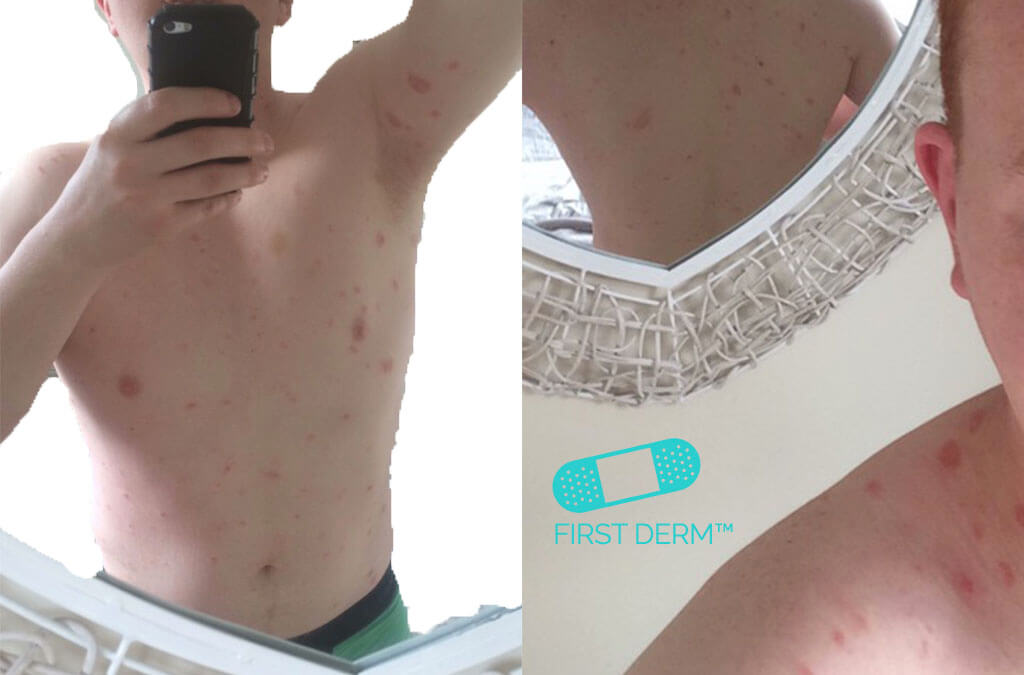
5. Pityriasis rosea
Online dermatologist question
24 years old male. The red spots are on my arm, armpit, back, chest, neck and groin area. Always itchy and intense itching at night. Had this for 6 weeks now . Seen the doctor three times. Had steroid cream, a tablet to stop the itching and an anti fungal tablet. None seem to work.
![Pityriasis Rosea (04) stomach [ICD-10 L42]](https://firstderm.com/wp-content/uploads/Pityriasis-Rosea-04-skin-ICD-10-L42.jpg)
Pityriasis Rosea on Stomach
Online dermatologist answer
Thank you for sending your case. Based on the information and images, this is possibly a PITYRIASIS ROSEA: Pityriasis Rosea is a non-contagious, benign rash that is most common in young children. This condition usually starts off with a single red, scaly patch of skin called a ‘herald patch’. Within short, multiple red scaly patches appear on the trunk, upper arms and legs.
Treatment
The lesions disappear without treatment after 6-8 weeks. However, moisturizing cream and a topical steroid can be recommended to relieve the itch. Usually mild steroid creams such as Hydrocortisone 1% are sold over-the-counter. Apply twice daily for a week to start with, then once daily for a week, then every other day for 2-4 weeks. If not better within 2 weeks, see a dermatologist in person to exclude other assessments.
Is this what you have? Try our FREE Skin Image Search today and get peace of mind
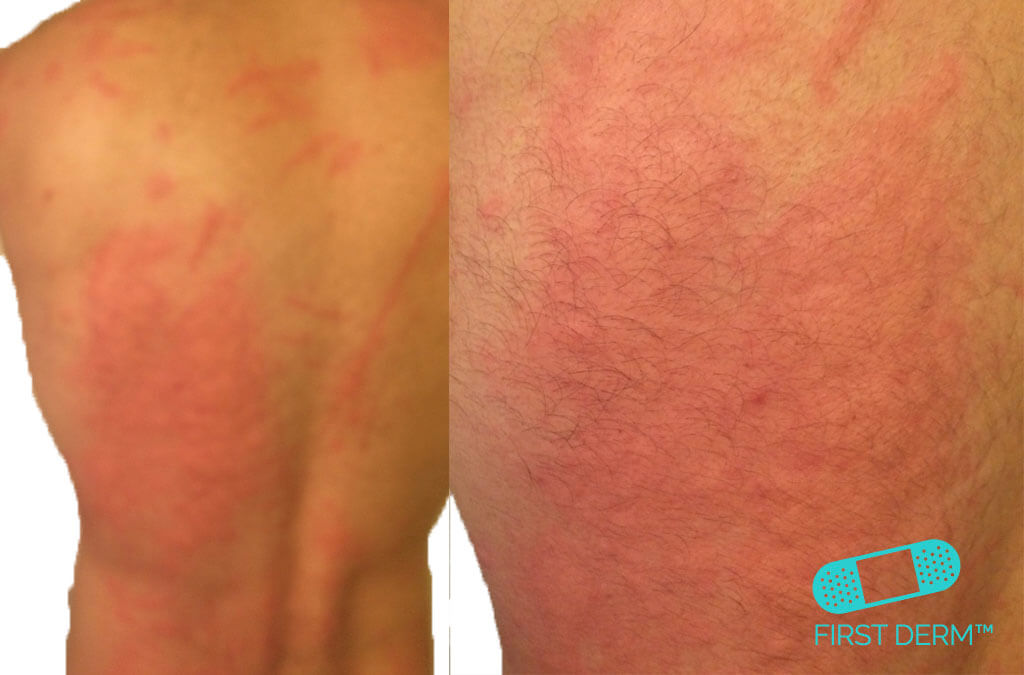
6. Dermographism
Online dermatologist question
34 years old male. Itching, rash now turning into welts. Cause unknown.
Dermographism on Back
Online dermatologist answer
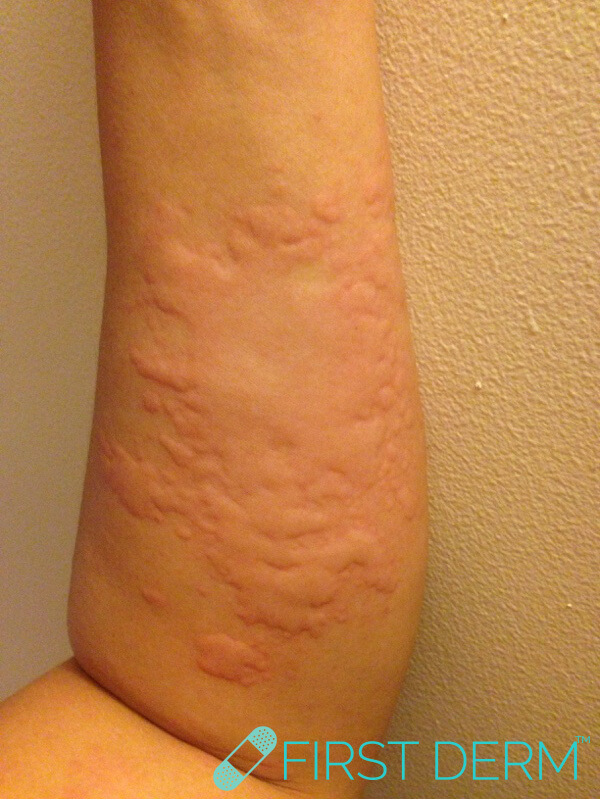
Based on the information and images submitted, this is possibly a URTICARIA: Urticaria or “Hives”. They are frequently caused by allergic reactions; however, there are many nonallergic causes like medication, infection, heat, cold, pressure on the skin or an external irritant for example.
This results in the release of the substance histamine in the skin, which causes local inflammation with swelling and gives rise to itching or burning, raised, red skin lesions known as wheals. These lesions have a tendency to move around and disappear within 24 hours only to appear again in other places. Dermographism (the skin becomes raised and inflamed when scratched), as shown in the photographs, is a common symptom.
Treatment
Over-the-counter antihistamine pills (e.g. Desloratadine 5 mg, once daily) are recommended to alleviate itching. Most often this will pass within a matter of days or weeks. If no improvement or if it spreads, see your family doctor or a dermatologist in person for a new evaluation and testing.
Is this what you have? Try our FREE Skin Image Search today and get peace of mind
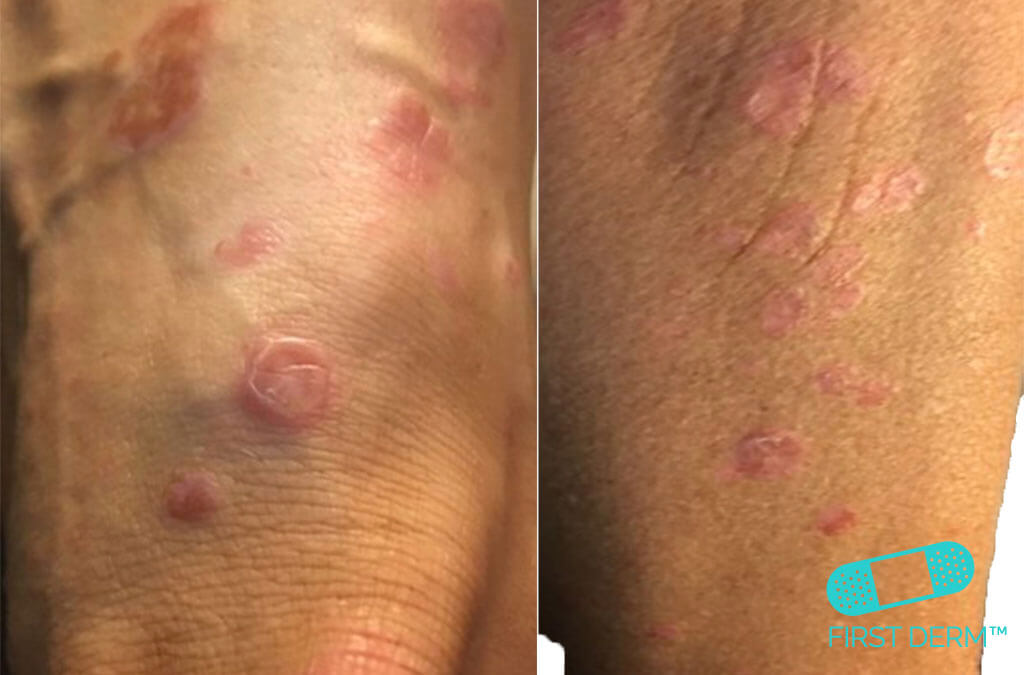
7. Itchy rash spreading all over my body – Psoriasis
Online Dermatologist question
Hi I am a 28 years man. At first it was only one rash which is the first picture I sent you, it started about a month and a half ago. Then 2 weeks ago, it just started spreading all over my body. They are small, but itch and leave like a scab if I scratch them. I have been to two doctors which one said it was eczema and the other one could not determine. So far, I have been taking triamcinolone acetonide and ketoconazole as a cream for 4 days now, but the symptoms seem to be getting worse. Please what should I do? I’m starting to get really worried about this.
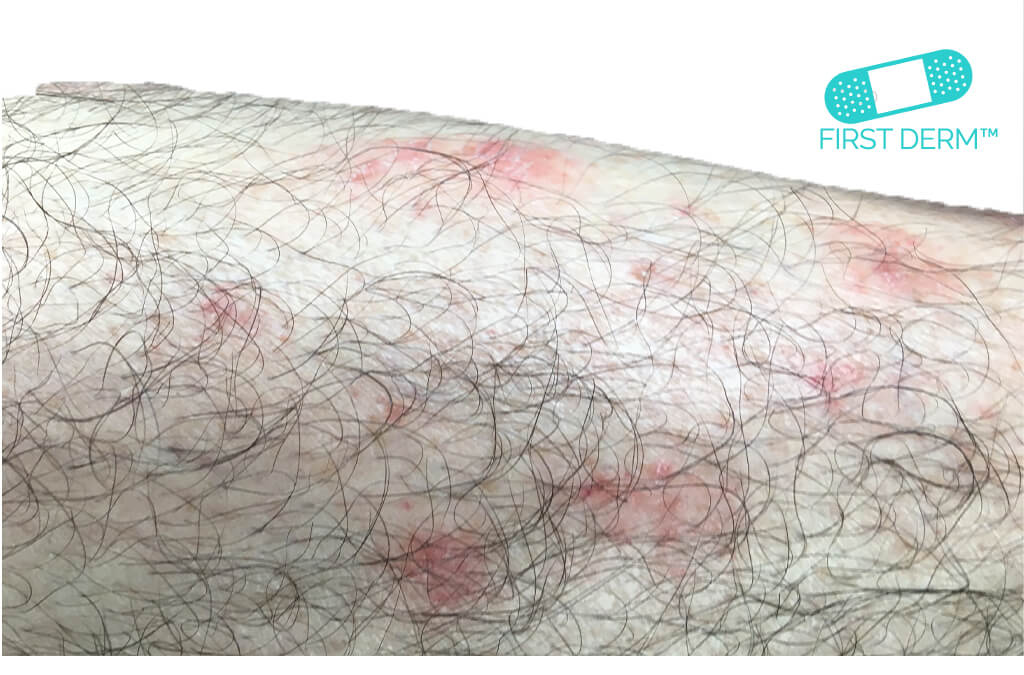
Psoriasis on Leg
Online dermatologist Doctor Geronimo Jones answer
Thank you for sending your case of itchy red rash spreading over the body. Based on the information and images, this is possibly PSORIASIS: Psoriasis is a chronic inflammatory disease of the skin which can present at any age. Red patches usually with white scales are seen on different skin areas such as elbows, knees, lower legs and/or scalp. Nevertheless, it can appear anywhere on the skin. A variable amount of itching can be experienced or none at all. Sometimes there are more family members with the condition.
Treatment
I recommend that you see a dermatologist or your family doctor in order to obtain prescriptions. Prescription treatment options include vitamin D-derived creams (e g Daivonex) with or without topical steroids (e g Daivobet), sun light or medical UV-therapy. In cases that don’t respond to this treatment, other systemic alternatives are available.
Use DICDOC.AI for guidance on a possible STD
Infectious Rashes
We’re going to split these rashes into 4. Bacterial, Fungal, Parasitic and Viral.
Bacterial Rashes
Eruptions caused by bacteria tend to be postular (small bumps filled with pus) or could be plaque-like and painful. Here’s some of the most common for you to read up on:
- Cellulitis
- Folliculitis
- Impetigo
- Rocky Mountain Spotted Fever
- Syphilis
Pictures and Diagnosis of Bacterial Rashes
Fungal Rashes
Fungal infections can be quite common and usually appear as fiery red marks with pustules (blisters) around the edges. Normally they affect folds in the skin such as the groin or breast area. Here’s some of the most common fungal rashes to look out for:
Pictures and Diagnosis of Fungal Rashes
Itchy rash red in groin – Intertrigo
Online Dermatologist question
45 Male I have had an itchy red rash on my inner thighs and on my scrotum where they touch the inner thighs for 2 months … Wondering if this is heat rash, jock itch, or chaffing and what would be the best treatment… I have tried some Jock itch medicine for a week but it didn’t really help… Diaper rash ointment seems to help with symptoms but I know it would be contraindicated if it is heat rash / prickly heat…. I have not had this problem before in the summer but I may be be 3-5 pounds heavier … not sure if that is what set it off?
Intertrigo in Groin
Online dermatologist Doctor Geronimo Jones answer
Possibly INTERTRIGO or CANDIDIASIS, an irritation that sometimes occurs simultaneously with a colonization by fungi. Frequent in sites like armpits, under the breasts or like in your case in the groin, it is not dangerous.
Treatment
You should respond promptly to a combined cream containing a mild cortisone cream eg hydrocortisone and an anti-fungal agent such as myconazole, which can be bought over-the-counter. The cream should be used twice daily for the first week, once daily for the second week, every other day on the third week and then twice weekly for a while.
It is also important to keep these sites dry, especially after taking showers and avoid to get too sweaty. If it does not improve see a physician for a more accurate examination. In a minor number of cases oral treatment becomes necessary. Too lose a few pounds is always a good piece of advice.
Found something unusual after sex? Get checked for free now
Parasitic Rashes
These rashes are usually caused by some kind of mite. Typically contracted by prolonged contact with an infected individual. It does not produce symptoms until the host becomes allergic to the mites after around 3 weeks. The most common:
Pictures and Diagnosis of Parasitic Rashes
Itchy rash for 5 weeks – Scabies
Online Dermatologist question
Female 34. I’ve had this rash for 5 weeks now. It started after I was sitting outside and I was bit by mosquitos. Those bites were on my upper arms and my legs and they resolved in a couple of days. Around that time is when I started getting this rash on my arms and briefly on my right thigh. On my arms, it started out on my wrists and quickly progressed to my forearms as well as to the palms of my hands and the backs of my hands. At that point it looked red circular and raised.
I had numerous bumps underneath my skin on the palms of my hands. It became increasingly more itchy, and then noticed I had a couple of spots of peeling skin between my fingers. Furthermore, I work in a jail and I was concerned that I may have contracted scabies. I went to an urgent care and the physician did not think it was scabies because there were no Burrows. Despite this, I still asked for the treatment and I did a treatment with malathion. That is when I noticed that I had small red raised bumps to the back of my knees and the top of my feet.
Typical Signs of Scabies
My husband was treated with malathion as well and we washed all our linens. Of note my husband does not have any rash. The next day when I woke up to wash off the medication I noticed that I had a different red raised diffuse itchy rash on the same thigh. Shortly after I started using triamcinolone. I noticed that within a day or two the rash on my forearms and my Legs/feet were almost gone. I’m not sure if it was from the malathion or from the triamcinolone. However the rash on my hands have persisted and have become increasingly itchy.
Over time the bumps on my hands have gotten darker, and now I have a peeling rash on my hands. It continues to be very itchy and I take Zyrtec/benadryl, I keep my hands moisturized throughout the day, and occasionally I still use triamcinolone (I had stopped using it after one week as I saw no improvement to my hands). None of them truly help but I do them anyway, as I’m desperate. So far, I haven’t started any new detergents/soaps/lotions/medications prior to the rash. I was in Hawaii 2 weeks before the rash, no other travel.
Furthermore, I don’t have pets but I’ve been around a couple of dogs during this time (their owners don’t have any similar issues). However, I have a history of hypothyroidism on levothyroxine, Vitamin D deficiency on ergocalciferol, and an eczema patch on the back of my neck that hasn’t bothered me in years.
![Scabies (04) hand [ICD-10 B86]](https://firstderm.com/wp-content/uploads/Scabies-04-hand-ICD-10-B86.jpg)
Scabies on Hand
Online dermatologist Doctor Geronimo Jones answer
Thank you for sending your case. Based on the information and images of your hand, SCABIES must be ruled out with full certainty: Scabies are inflammatory lesions caused by a mite that digs burrows in the skin, that sometimes can be difficult to see. This parasite is transmitted through direct physical contact with another person with scabies. The lesions cause itching which can be severe. The itch is usually more common during the evening or night.
Treatment
In order to confirm Scabies it is of utmost importance that a dermatologist in person takes a sample to be able to see the causing mite in the microscope. If the diagnosis is confirmed I usually prescribe Permethrin cream
Viral Rashes – Exanthem
Viral rashes are known as exanthems. Usually they are symmetrical and affect the skin surface all over the body. There are even arguments to suggest Covid-19 can cause reactions on the skin. Occasionally they are caused by STDs and may come with other symptoms such as coughing and sneezing. Here are the most common:
Online Dermatologist question
26 male. Rash has been itching for a month on and off now. The bumps showed up the day after i applyed anit-itch cream and sexual intercourse. Itchy red rash. Small raised shiny bumps sometimes red, pinkish or fleshed colored. Bumps dont hurt, pop or itch although the rash itches ever now and then. I cant really see a crater in the bumps either.
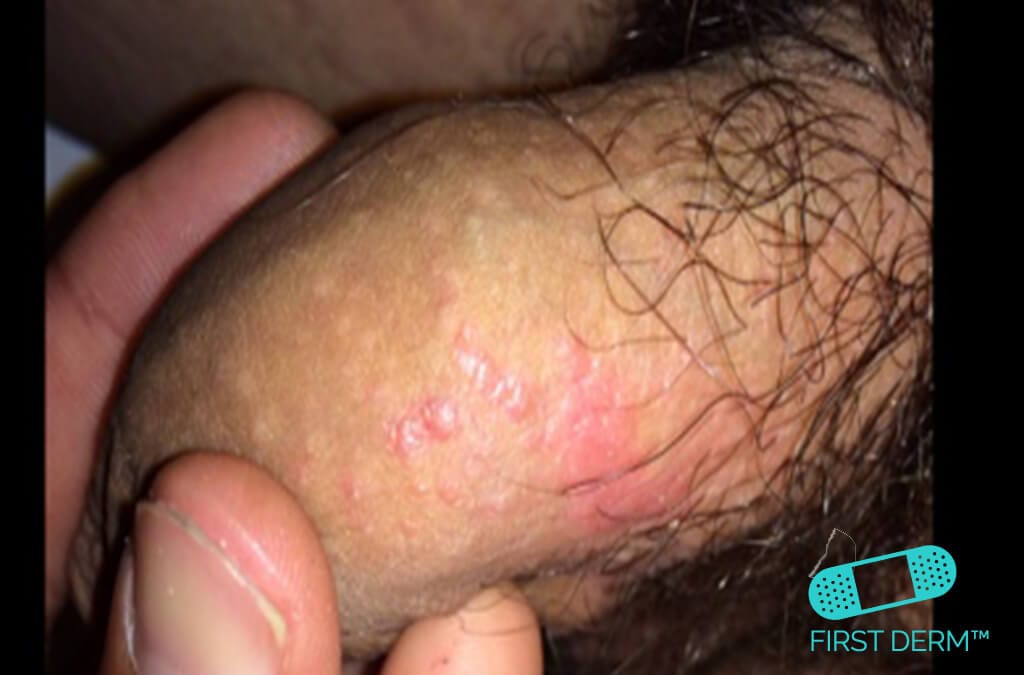
Molluscum Contagiosum – Penis
Online dermatologist Doctor Geronimo Jones answer
Possibly DERMATITIS and MOLLUSCUM CONTAGIOSUM, a viral infection (poxvirus) which gives rise to small shiny bumps in the genital region in adults. However, SCABIES cannot be fully excluded. Scabies gives rise to inflammatory lesions caused by a mite that digs burrows in the skin. This parasite is transmitted through direct physical contact with another person with scabies. The lesions cause itching of varying degree and is more common during the evening/night.
Treatment
Before treating the lesions, it is of utmost importance to confirm the diagnosis with a dermatologist in person. To relieve the itching until you have your appointment, you can apply hydrocortisone cream (sold over-the-counter) twice daily and mositurizing cream. Try to avoid scratching the lesions.
Should I Seek Medical Advice?

Skin Care Specialists – Dermatologists
1. What does the rash look like?
In the recent past the best way to understand what your rash looks like is to start googling and look for similar images. For example, if the rash looks like it could be ringworm then its time to get yourself to the doctor. Frankly, despite us creating our skin guide it can still be challenging when looking at so many different rashes, this is why we have built our AI, so that you can upload your image and be provided with the matching diseases – we’re here to narrow your search and give you answers!
2. Are you in pain?
This seems like an obvious one but its not always! If the rash is bothering you either mentally or physically, if the itch is incontrollable and hasn’t gone away within a few days then speak to a dermatologist. This is usually a good warning sign that our body is fighting something and it is time to act, don’t just leave it.
3. Are there other symptoms?
Another good way to understand your rash is to check for other symptoms, if you notice any signs such as shortness of breath, bleeding, blisters in mouth, eyes or on the skin or even swelling then we recommend you visit your doctor or get checked up by your dermatologist as quickly as possible.
Try our FREE Skin Image Search today and get peace of mind
Itchy rash Treatment
While you try and find out what you have over-the-counter symptomatic treatment is available. Treatment can include hydrocortisone steroid cream – for hives, antihistamine is frequently a chosen option. Light clothes/cool bedroom is recommended. Avoid dry skin – use moisturizing frequently – sparingly use water with soap. Not showering every day. Sun and salt water is therapeutic.
Is this what you have? Try our FREE Skin Image Search today and get peace of mind
Over-The-Counter (OTC) products
70% of First Derm™ users get well with an OTC that can bought at your nearest pharmacy or an online pharmacy. OTCs range from cortizone, topical antibiotics, sunscreen, moisturizing creams and disinfectants. It is important to know what your skin concern is, before embarking on self-treatment, for example perioral or periorbital dermatitis; cortizone creams are counter productive. While impetigo and acne can have a good effect with good hygiene and disinfectants bought at your local pharmacy.
Getting Tested – Allergies
There are ways to verify which allergen you are allergic to, with simple allergy tests, either with a “prick test” or a “blood test”. The blood tests are more accurate and can see a lot more parameters with only drawing blood. This blood test can test your sensitivity to hundreds of different allergens and give you a complete picture of your allergy.
This information is useful to avoid outbreaks in the future. If your findings do not seem related to an external source, the second most likely cause is an underlying disease or an infection. Infection-related rashes are easy to detect, because they usually come along with other symptoms. They can also appear after contact with an infected person or animal.
Ask Our Dermatologists
We hope this article has provided you with sufficient information on your rash! If you’re concerned and would like the advice of a professional, do not hesitate to send in a case to us today!
Sources
Itch: From mechanism to (novel) therapeutic approaches. Yosipovitch G, Rosen JD, Hashimoto T. J Allergy Clin Immunol. 2018 Nov;142(5):1375-1390
Epidemiologic Characteristics of Patients Admitted to Emergency Department with Dermatological Complaints; a Retrospective Cross sectional Study. Kilic D et al from Department of Emergency Medicine, Kepez State Hospital, Antalya, Turkey. Arch Acad Emerg Med. 2019 Aug 19;7(1):e47. eCollection 2019.
Ask a Dermatologist
Anonymous, fast and secure!
Over 15,000+ Readers
Get fresh content from First Derm


Ask a Dermatologist
Anonymous, fast and secure

Dr. Raquel Molina Martinez is a board-certified dermatologist from Barcelona with over a decade of experience. Trained at Gothenburg’s University Hospital, she now practices at Centre Medic in Catalonia.