Contagious Rashes in Children: 7 Conditions Every School Parent Should Know
- Childhood skin rashes are common and can be hard to tell apart, especially on a busy school morning.
- Some rashes are highly contagious and require your child to stay home, while others pose little to no risk in a school setting.
- This article covers 7 of the most common rashes seen in children: impetigo, ringworm, hand foot and mouth disease, head lice, molluscum contagiosum, slapped cheek, and scabies.
- A quick-reference table is included to help you make a confident decision in minutes.

Guide to a quick decision: can they go to school today?
| Rash | Mode of spread | When can my child return to school? | When to see your healthcare provider |
|---|---|---|---|
| Impetigo | Direct contact with lesions or shared personal items3 | 48 hours after starting antibiotics, or once lesions have crusted over1,2 | Yes — your child needs an antibiotic prescription3 |
| Ringworm (body) | Direct contact with lesions or shared personal items | As soon as antifungal treatment has started4,5 | Yes — your child needs an antifungal prescription |
| Hand, foot and mouth disease | Saliva, exhaled droplets, blister fluid or contaminated objects8 | Once your child is fever-free and sores have begun to scab over6,20 | Not usually needed6 |
| Head lice | Close head-to-head contact9 | As soon as treatment has started6,9 | Not usually needed6 |
| Molluscum contagiosum | Direct contact with lesions or shared personal items | No need to keep your child home11,12 | Only if bumps are very painful, swollen, widespread or near the eyelids13 |
| Slapped cheek | Saliva, exhaled droplets or contaminated objects15 | No need to keep your child home6,15 | Not usually needed6 |
| Scabies | Prolonged skin-to-skin contact16 | 24 hours after starting treatment6,16 | Yes — your child needs a prescription treatment6 |
1. Impetigo
Impetigo is a skin rash resulting from the infection with bacteria Streptococcus pyogenes or Staphylococcus aureus. This is the culprit behind 10% of all skin rashes in children, commonly found in children between 2 to 5 years of age, during summer and fall.[3]
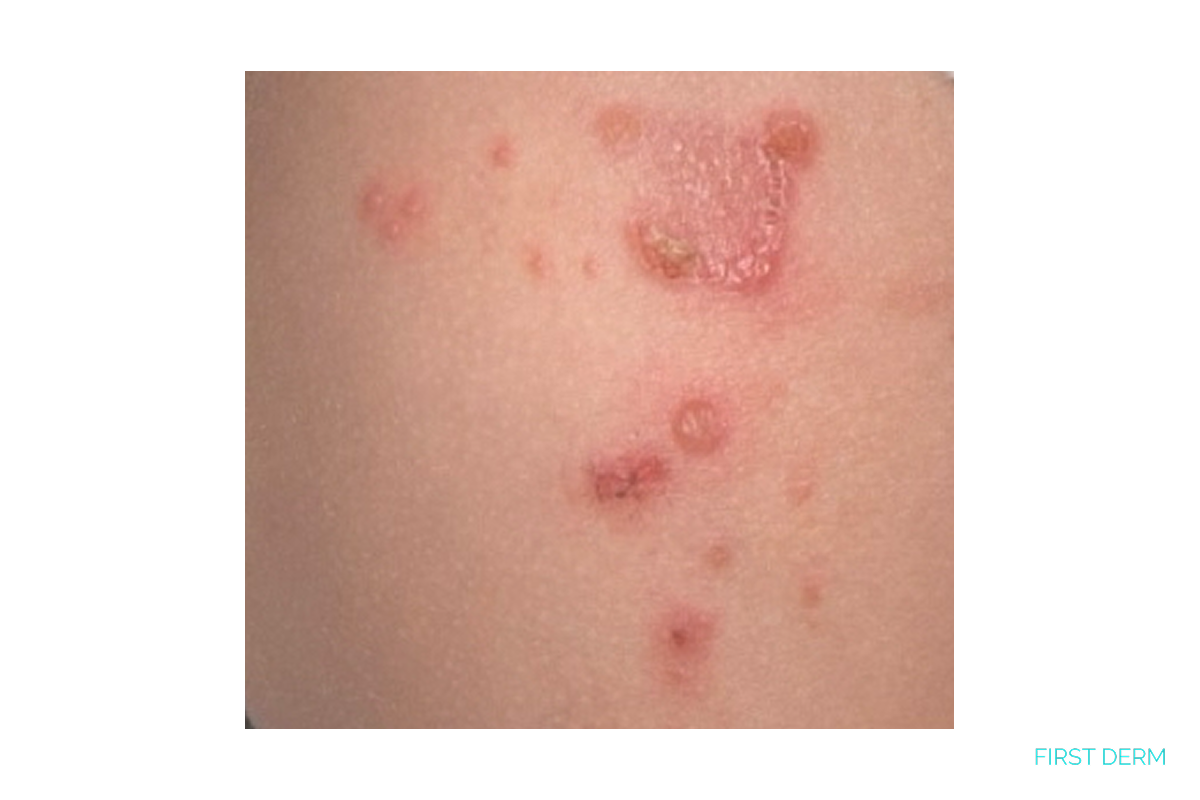
Impetigo: red, blister-like sores that crust over as the infection progresses. Caused by Staphylococcus aureus bacteria.
Appearance: starting with small bumps on the skin, impetigo lesions gradually fill with pus and later break down to form golden or honey-colored crusts, which is characteristic to the disease.[3] As they dry off, the base will appear red in color. They often appear in clusters on the face, around the mouth and nose, or on the limbs.
Disease spread: impetigo can spread very easily from person to person via direct contact. Furthermore, it spreads from one area of the body to another in the same manner. Shared personal items such as towels or drinking cups also transmit it. It is easier for the infection to take place if skin is already damaged, as in case of insect bites, small cuts or scratches on the skin. Once the bacteria are on the skin, it may take 4 to 10 days for the infection to occur and lesion to appear.
School rules: Most of the schools in the UK recommend absence till 48 hours after starting antibiotics or after the lesions have crusted off.[1] US schools allow attendance 24 hours after starting treatment with antibiotics.[2]
What to do at home: the most important measure is to prevent further spread to different body parts, and to the siblings. This can be achieved by not sharing towels/ blankets or cups with the affected child, minimizing the exposure of lesions by covering them up and refraining from touching and scratching them.
When to see your healthcare provider: all children with impetigo need medical attention because the lesions do not fade away on their own. Prescription medication with antibiotics is necessary to cure this condition.
2. Ringworm (Tinea corporis)
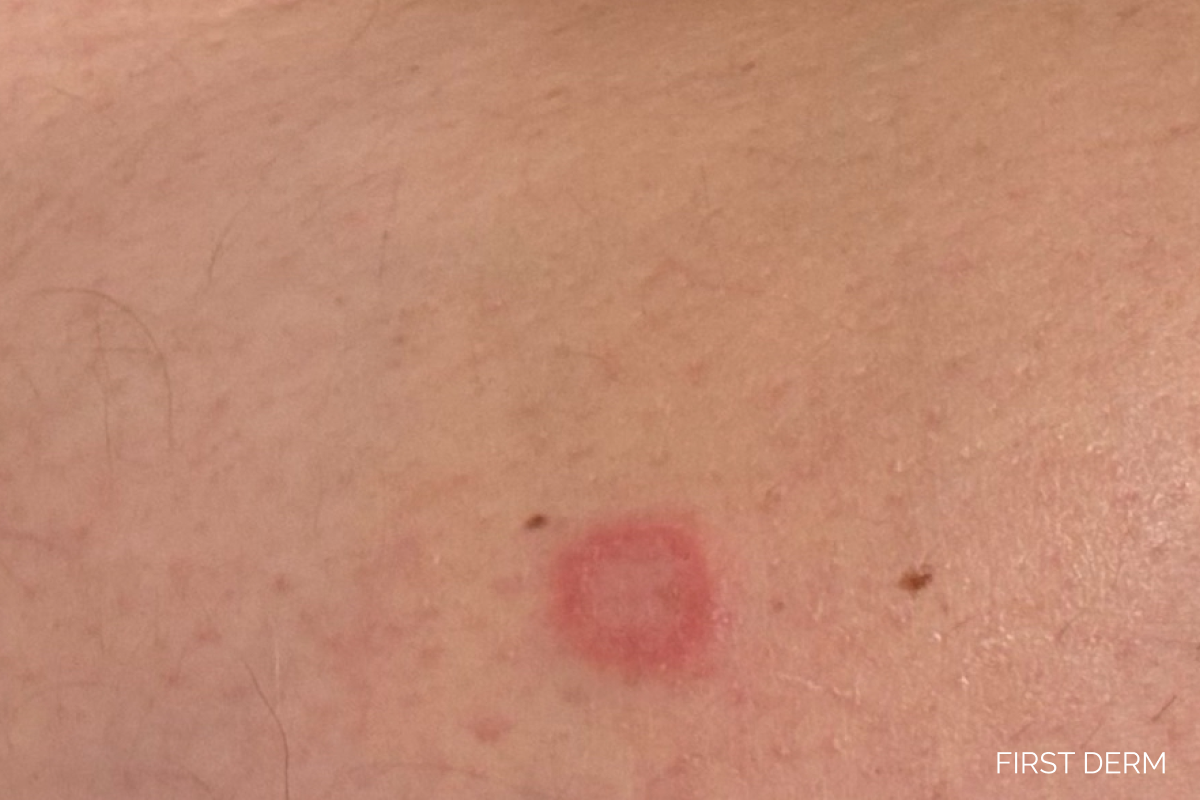
Tinea corporis (ringworm): a circular red, scaly patch with a clearer centre, caused by a fungal skin infection.
When the outermost layers of the skin is infected with the group of fungi called dermatophytes, ringworm rash appears.
Appearance: ring shaped itchy red rash with raised scaly margins and flat center is characteristic of ringworms. It can appear on any part of the body, including scalp, trunk, arms, legs, and the groin area.
Disease spread: direct contact with people or animals (eg: cats, dogs, pet rodents) with ringworm lesions or contact with clothing items, bed linen, contaminated surfaces can cause disease spread. It may take one to three weeks’ time for the rash to appear after skin is contaminated with the dermatophytes.[5]
School rules: most of the schools in both UK and US have no strict rules of exclusion from attendance due to ringworm infection. However, they suggest starting treatment early and keeping the rashes covered up as preventive methods when attending school.[4],[5]
What to do at home: over the counter antifungal cream can be applied to the affected skin in mild cases. Remember to keep using it for a week after the rash has cleared off, as stopping treatment early can lead to reappearance of the disease.
When to see your healthcare provider: long lasting ringworms warrant a visit to your doctor who would prescribe antifungal cream to be applied to the skin involved, or antifungal tablets to drink in severe cases.
3. Hand foot and mouth disease
As the name implies, this rash commonly appears on the hands, feet, and mouth as the result of a viral infection. It is common among children younger than 7 years of age and commonly seen in settings like day care centers and summer camps.[8]
Appearance: the hallmark of hand foot mouth disease is fever and sore throat followed by appearance of fluid filled small blisters with surrounding redness, that later rupture to form small ulcers.8 Usually, they are not itchy or painful.
Disease spread: direct contact with saliva, blister fluid or exhaled droplets from an infected person can spread the disease to another, especially within the first week.[8] However, virus will still be there in stools for 6 weeks after the rash is seen.[8]
School rules: no exclusion from school exclusively due to the lesions. However, keep your child at home if they are having high fever, feeling too unwell or appear too listless.[6]
What to do at home: as it usually resolves on its own, you can keep your child home and make sure they are well rested and drinking plenty of fluids. Over the counter medications like ibuprofen tablets and diphenhydramine to gargle can help ease the pain.[8]
When to see your healthcare provider: if the child is very sick, refusing to drink or passing less urine than usual, bring them to a doctor. Otherwise, the child should improve within 2 weeks without any prescription medications.
4. Head lice (pediculosis)
Appearance: if you carefully look at your child’s head, you may see crawling lice, especially behind the ear or at the nape. Lice eggs, known as nits, may be visible as tiny oval sacks glued to hair strands. Itching almost invariably occurs but may take several weeks to appear after infestation has taken place.[10]
Disease spread: lice crawl from one person’s hair to another with close contact. They cannot jump or fly. Sharing personal items like hats and hair accessories which may contain head lice is another common mode of spread.
School rules: both UK and US schools do not strictly prohibit attendance or advocate for early departure from school due to lice. However, they emphasize the need to start treatment as soon as possible before the child resumes schooling.
What to do at home: combing wet hair with a fine toothed ‘lice comb’ help manually remove lice from the head.[10] It is important to search for other family members for head lice as well, when one is infested. Several over-the-counter medicated shampoos such as Permethrin 1% are available as treatment options.[10] After the initial application, it should be repeated in a week to get rid of the nits.
When to see your healthcare provider: no need to visit your healthcare provider if the problem resolves with the aforementioned methods.
5. Molluscum contagiosum
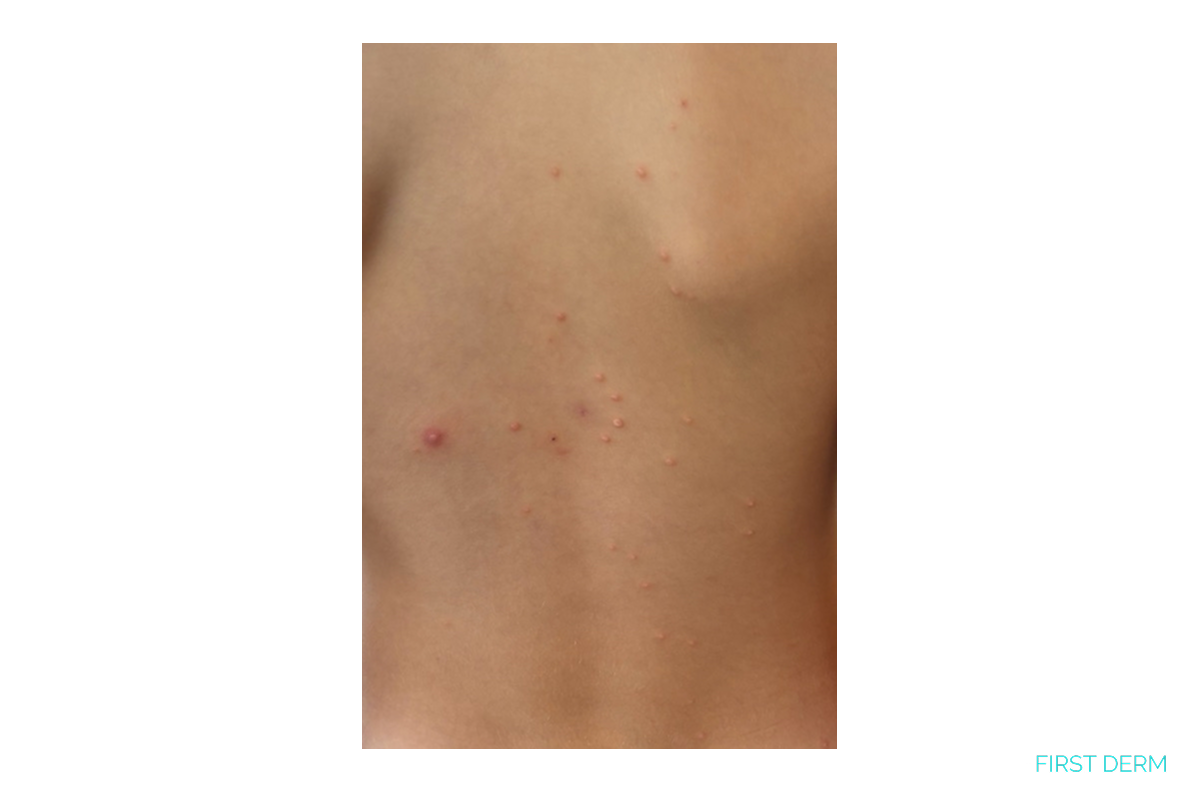
Molluscum contagiosum: small, round, shiny bumps (papules) scattered across the skin, caused by a poxvirus. Lesions often clear on their own without treatment.
Commonly seen in children aged 1 to 10 years, molluscum contagiosum is a viral infection that results in a harmless rash with skin-colored bumps.[12]
Appearance: multiple dome shaped skin-colored bumps are characteristic of molluscum contagiosum.
Disease spread: direct skin to skin contact or sharing objects used by infected children are the common modes you can get the disease.
School rules: no exclusion from school solely due to the lesions. Most schools recommend covering all the visible lesions to prevent infection from spreading further.
What to do at home: these lesions heal on their own, but the process may take up to 18 months.[12] some lesions will not completely clear out till one year.[12] Meanwhile, remember not to share clothing items or any other utensils with the infected child. Do not squeeze or scratch the bumps as it may worsen the condition by involving other body parts as well.
When to see your healthcare provider: if the bumps are on concerning areas like eye lids, you may pay a visit to your healthcare provider. If the bumps become very painful, swollen, red or very widespread and cosmetically concerning, bring your child in for prescription medication or other treatment options like curettage or cryotherapy.[13]
6. Slapped cheek
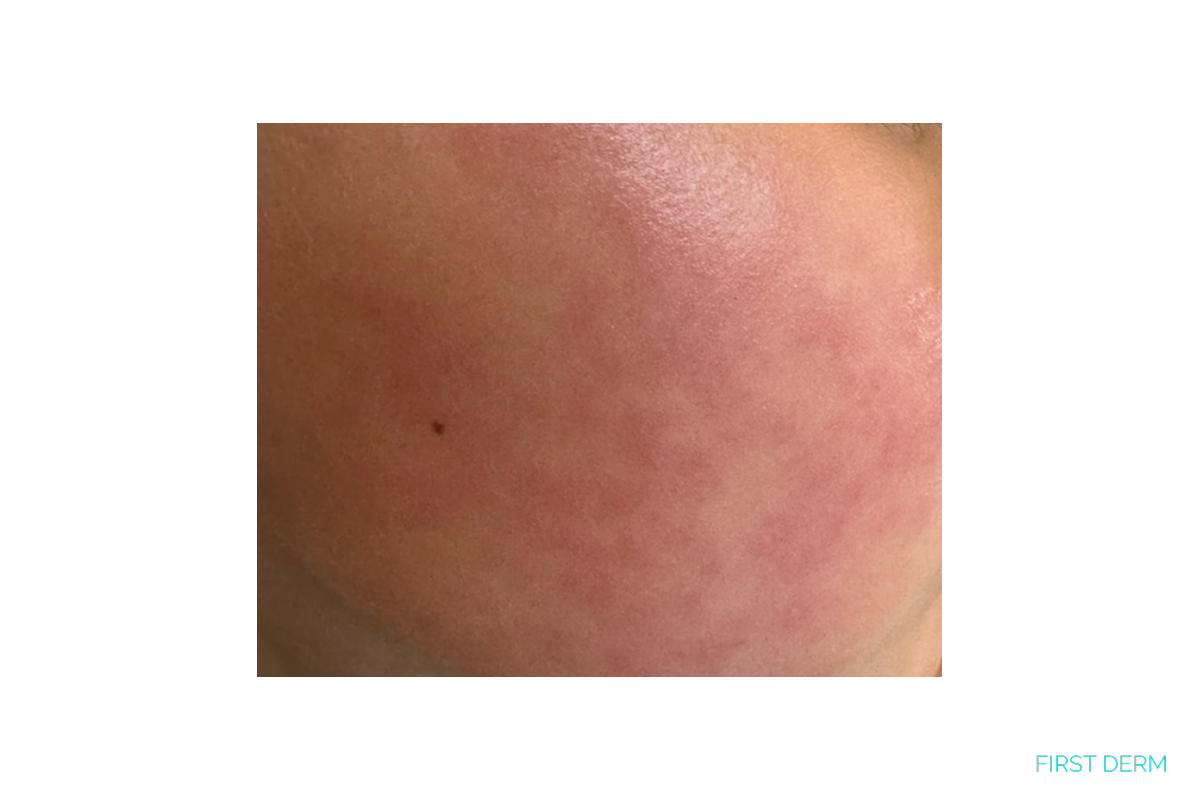
Erythema infectiosum (slapped cheek disease / fifth disease): distinctive bright red flushing on the cheek, caused by parvovirus B19. The rash typically appears after the contagious phase has passed.
Also known as erythema infectiosum or fifth disease, slapped cheek is caused by Parvo B19 viral infection. This is commonest among children between 5 to 15 years of age, commonly in winter and spring.[14]
Appearance: affected kids have reddened cheeks as if they have been slapped, without any other symptoms or very minimal symptoms like fever, upset stomach or body aches and pains. It is not uncommon to see a different lace-like rash on the trunk, arms and legs, which may worsen after exposure to the sun.[15]
Disease spread: coughed out droplets from a child with the disease can give it to another.15 However, by the time the rash appears, the infectious period has already passed.[14]
School rules: no rules against school attendance.
What to do at home: no specific treatment is required. Make sure the child is well rested and hydrated.
When to see your healthcare provider: if it gets complicated with an “Aplastic crisis”, where low blood cell counts lead to purple patches on the skin or difficulty to breathe, the child needs medical attention.[14] The same goes for children with bleeding disorders like thalassemia or sickle cel disease from birth. Also, if you are pregnant, seek medical advice quickly to prevent any potential harm to your unborn baby.
7. Scabies
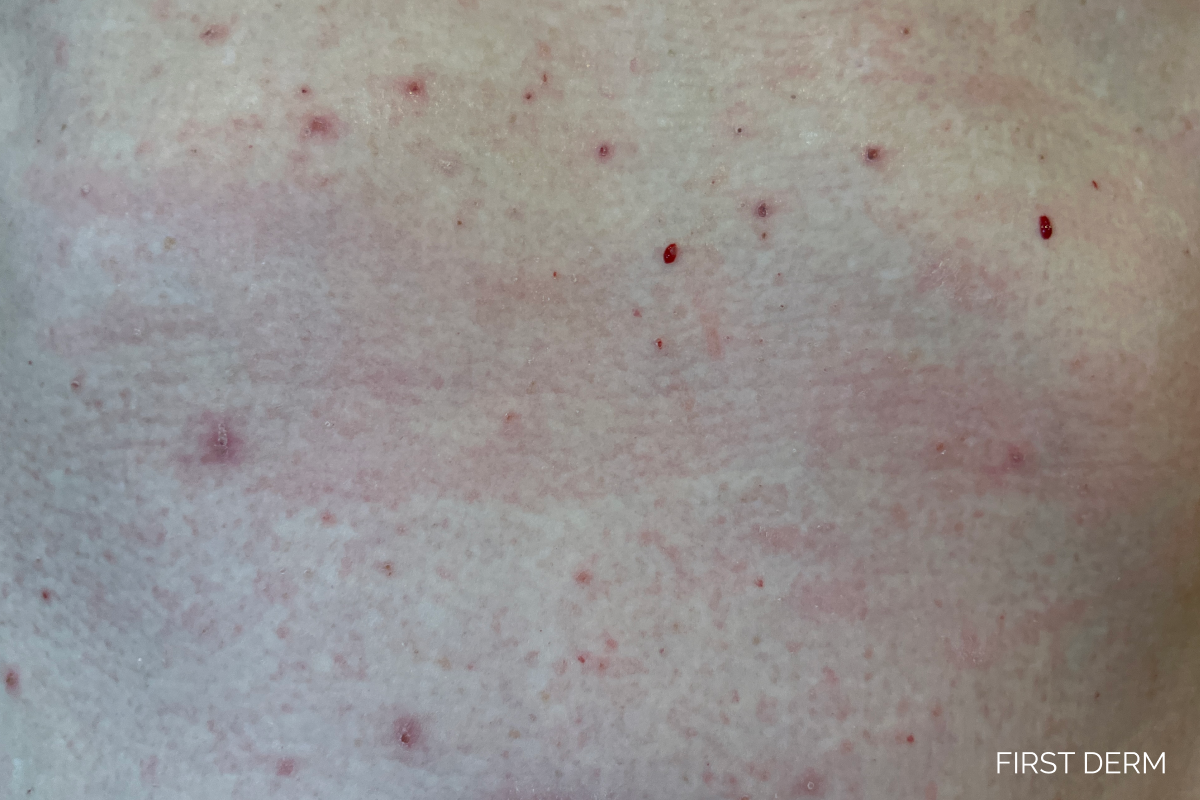
Scabies: clusters of small, intensely itchy red spots caused by a microscopic mite that burrows into the skin. Spreads through prolonged skin-to-skin contact
Scabies occurs when the skin gets infested by a small insect named Sarcoptes scabei, that burrows into the skin.
Appearance: intense itching that worsens towards the night, along with small bumps, thickened flat lesions or wavy tracks can be seen, especially in the finger web spaces.[17] In children below 2 years, even the face and the scalp can be affected. Remember that the itching may last up to 2 weeks after successful treatment.
Disease spread: for scabies mites to be transferred, prolonged direct skin-to-skin contact is needed.
School rules: while most schools do not mandate sending the child home early, they recommend same day treatment initiation and completion of first overnight treatment before returning to school.[16]
What to do at home: bring the child to your healthcare provider early for prescription medications. It usually consists of a cream or a lotion to be applied to the whole body, which is then left in place overnight. Make sure everyone in the family is treated, even if they have no symptoms.[17] Mites can be removed from clothing and bed linen by washing them in hot water. (over 50°C)
When to see your healthcare provider: as early as possible, for early commencement of treatment.
Rule out measles
Recently, the US reported an unusually high number of measles cases, the most recent peak being 296 cases per week reported in January 2026.[18] Worst numbers are from South Carolina, and Pennsylvania, where over 600 cases per week are seen.[18] The reason for this sudden spike is believed to be the high number of unvaccinated kindergarten kids and the ability of the measles virus to spread very easily and quickly.
You can recognize measles by the flu like illness with red eyes and runny nose, that is followed by a red pinpoint rash 3 to 4 days later. It starts from behind the ears or at the hairline and spreads downwards. While there is no specific treatment, it is important to avoid crowded places and wear masks to prevent disease from spreading further. Make sure your child is vaccinated against measles as this is the most important prevention method.[19]
Keep an eye out for these Red Flags
These are some features of a rash due to a serious condition that warrants a quick trip to your healthcare provider.
- Very ill looking child with fever
- Not drinking enough to stay hydrated
- Not passing urine as usual/ fewer wet nappies in babies
- Rash in concerning areas like eye lids, mouth or genitalia
- Multiple bruise-like patches that do not blanch when pressed with a clear glass
- Swollen lips, longue, face or any difficulty in breathing
- Rash that is spreading fast, hot, blistering or very painful
If the child is playful and feeding well, the chances are that the rash is harmless.
How to control further spread
General preventive methods for any rash include hand washing, using face masks and other personal protective wear, covering up open blisters/ ulcers, avoiding crowded places, and avoiding shared personal items. Specific preventive methods discussed above, such as wet combing hair with a fine-toothed comb for head lice should be followed where necessary.
Things that are commonly done but not useful include the following.
- Deep cleaning the household when head lice are found- lice cannot survive for more than two days away from scalp so it is unlikely there will be any left alive in your carpets or furniture.
- Keeping your child home even after the disease is not infectious anymore eg: appearance of the rash in slapped cheek means the child cannot spread the disease anymore.
What to do next
First step is to try to identify the rash; look for any alarming features. Check out the school rules and see if your child is fit to attend. For a more reliable diagnosis, take clear pictures of the rash in good natural light, one close up and one wider shot, and send it to be reviewed by a board-certified dermatologist online.
Frequently asked questions:
- How long is my child contagious?
While some conditions can spread even after the rash resolves, such as hand foot and mouth disease, some become noncontagious by the time the rash develops. Slapped cheek is an example of the latter category. Some rashes become noninfectious after the start of antibiotics, such as impetigo.
2. Should I treat the whole family?
Some conditions like scabies require treating the entire family at the same time. But most other conditions, such as head lice, usually require treatment of affected people only.
3. Can adults catch the disease from their children?
Yes. All the conditions discussed above can be spread to adults. While viral rashes will appear in a milder form, scabies and impetigo can be equally uncomfortable in adults as well. Slapped cheek will present with joint pains rather than the classic rash you see in children.
4. Can my child go to school with ringworm infection?
You can send your child to school as soon as the treatment is started, even if the rash is still present. Most schools require adherence to infection prevention methods, such as avoiding contact sports, shared personal items and keeping the visible lesions covered.
5. Should the school inform me if a rash is going around?
Most schools do not have a policy of informing all families about common rashes, but serious infections like measles are handled differently, which will be notified to all relevant authorities.
6. How long does molluscum take to clear?
This condition takes 12 to 18 months to heal, sometimes even longer without treatment. However, it completely fades unless the bumps are scratched.
References
First Derm ensures the highest quality and accuracy in our articles by using reliable sources. We draw from peer-reviewed studies, academic research institutions, and reputable medical journals. We strictly avoid tertiary references, linking to primary sources such as scientific studies and statistics. All sources are listed in the resources section at the bottom of our articles, providing transparency and credibility to our content.
- NHS. Is My Child Too Ill for school? nhs.uk. March 2, 2022. Accessed September 10, 2026. https://www.nhs.uk/live-well/is-my-child-too-ill-for-school/
- CDC. Clinical Guidance for Group A Streptococcal Impetigo. Group A Strep Infection. May 22, 2024. Accessed September 10, 2026. https://www.cdc.gov/group-a-strep/hcp/clinical-guidance/impetigo.html
- Nardi NM, Schaefer TJ. Impetigo. Nih.gov. July 31, 2023. Accessed September 10, 2026. https://www.ncbi.nlm.nih.gov/books/NBK430974/#article-23410.s6
- NHS. Ringworm. NHS. October 26, 2020. Accessed September 10, 2026. https://www.nhs.uk/conditions/ringworm/
- Ringworm—Child Care and Schools | Thompson River Pediatrics and Urgent Care – Johnstown, CO. Trpeds.com. March 31, 2026. Accessed September 10, 2026. https://www.trpeds.com/medical-conditions/ringwormchild-care-and-schools
- UK. Public health exclusion periods in children and young people’s settings. GOV.UK. April 8, 2026. Accessed September 10, 2026. https://www.gov.uk/government/publications/health-protection-in-schools-and-other-childcare-facilities/public-health-exclusion-periods-in-children-and-young-peoples-settings
- CDC. When Students or Staff are Sick. Children and School Preparedness. December 9, 2024. Accessed September 10, 2026. https://www.cdc.gov/children-and-school-preparedness/php/interventions/when-students-or-staff-are-sick.html
- Guerra AM, Orille E, Waseem M. Hand, Foot, and Mouth Disease. [Updated 2023 Mar 4]. In: StatPearls [Internet]. Treasure Island (FL): StatPearls Publishing; 2026 Jan-. Available from: https://www.ncbi.nlm.nih.gov/books/NBK431082/
- CDC. Providing Care for Individuals with Head Lice. Parasites – Lice. February 21, 2024. Accessed September 11, 2026. https://www.cdc.gov/lice/caring-head/index.html
- Bragg BN, Wills C. Pediculosis. Nih.gov. March 14, 2023. Accessed September 11, 2026. https://www.ncbi.nlm.nih.gov/books/NBK470343
- CDC. Molluscum Contagiosum in Schools, Daycares, and Pools. Molluscum Contagiosum. 2024. Accessed September 11, 2026. https://www.cdc.gov/molluscum-contagiosum/special-environments/index.htm
- Molluscum contagiosum. Bad.org.uk. 2025. Accessed September 12, 2026. https://www.bad.org.uk/pils/molluscum-contagiosum
- Kumar G, Stern JM, Daley SF. Molluscum Contagiosum. [Updated 2025 Dec 13]. In: StatPearls [Internet]. Treasure Island (FL): StatPearls Publishing; 2026 Jan-. Available from: https://www.ncbi.nlm.nih.gov/books/NBK441898/
- Macri A, Chamarthi VS. Parvovirus B19 Infection. [Updated 2026 Mar 11]. In: StatPearls [Internet]. Treasure Island (FL): StatPearls Publishing; 2026 Jan-. Available from: https://www.ncbi.nlm.nih.gov/books/NBK482245/
- Kids Health Info: Slapped cheek (fifth disease). Rch.org.au. 2018. Accessed September 12, 2026. https://www.rch.org.au/kidsinfo/fact_sheets/slapped_cheek_fifth_disease/
- Scabies—Child Care and Schools. Pediatric Patient Education. Published online March 31, 2023. doi:10.1542/ppe_document080
- Ziebold C, Crane JS. Scabies. ncbibooks. December 13, 2025. Accessed September 12, 2026. https://www.ncbi.nlm.nih.gov/books/NBK544306/
- Centers for Disease Control and Prevention. Measles cases and outbreaks. Measles (Rubeola). April 25, 2025. Accessed September 13, 2026.
- Kondamudi NP, Tobin EH, Waymack JR. Measles. ncbibooks. May 5, 2025. Accessed September 13, 2026. https://www.ncbi.nlm.nih.gov/books/NBK448068/
- Hand Foot and Mouth Disease. Center for Disease Control and Prevention. May 7, 2024. Accessed September 15, 2026. https://www.cdc.gov/hand-foot-mouth/about/index.html
Ask a Dermatologist
Anonymous, fast and secure!
Ask a Dermatologist Now
Anonymous, fast and secure!

The Specialist doctor from the University Hospital in Gothenburg, alumnus UC Berkeley. My doctoral dissertation is about Digital Health and I have published 5 scientific articles in teledermatology and artificial intelligence and others.